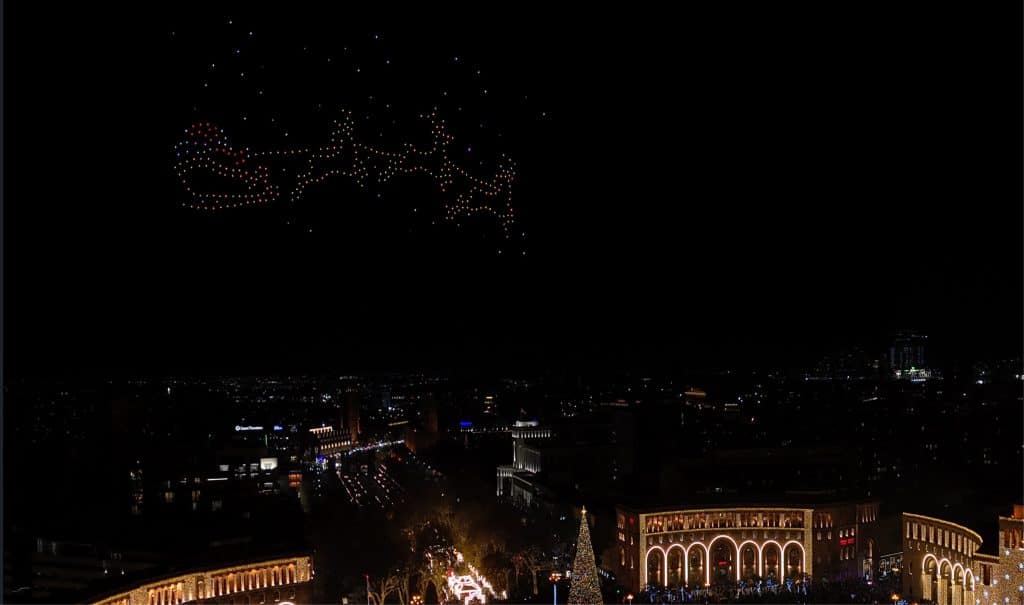
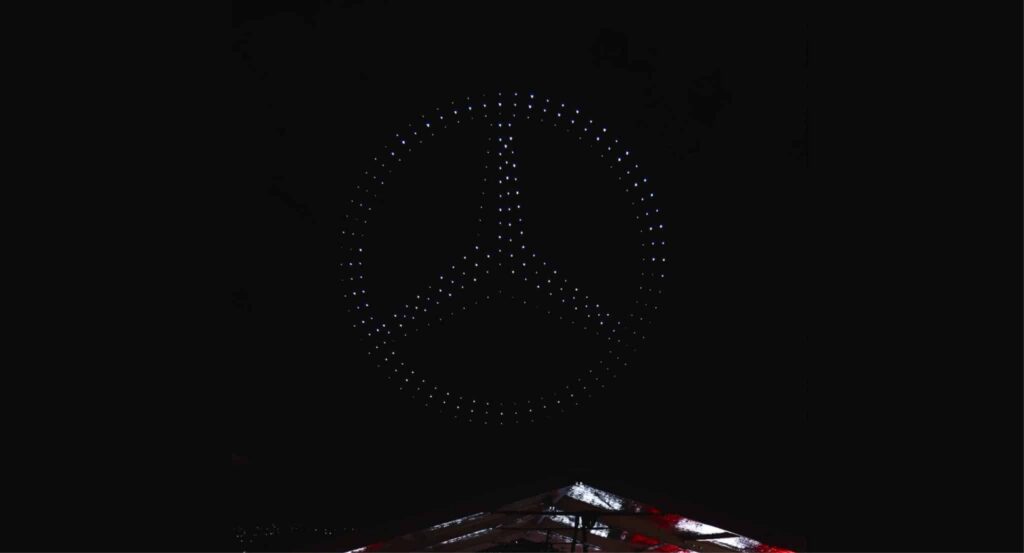
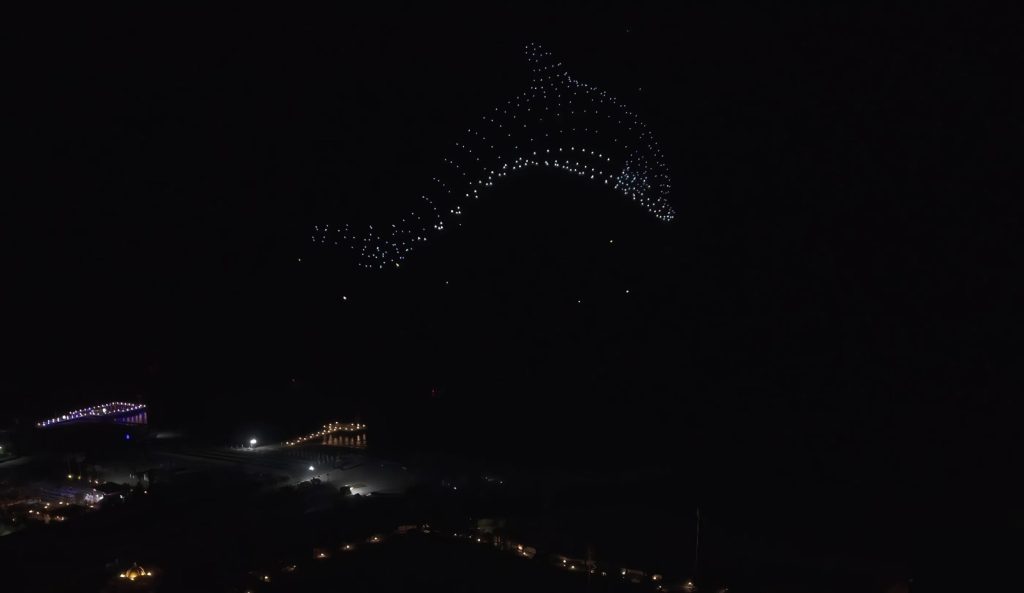
From concept to spectacle
We start with an idea and turn it into a script where every formation and lighting cue serves the story. The result is a performance in which technology works for emotion
Turnkey drone shows across the UAE, Saudi Arabia, Qatar,
Kuwait, Bahrain and Oman, on projects of any scale
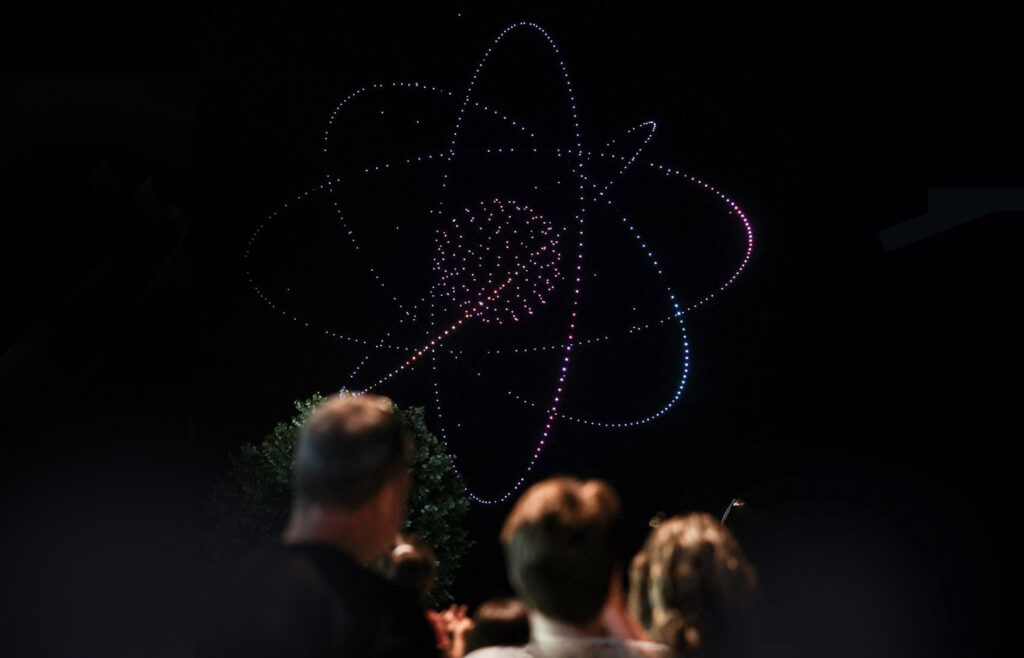
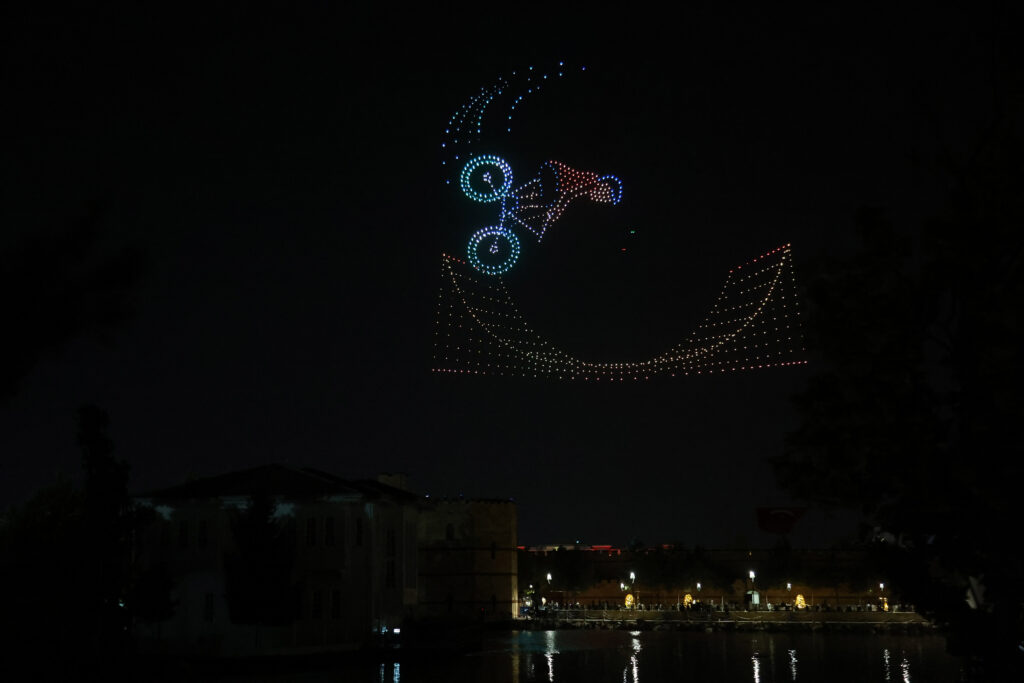
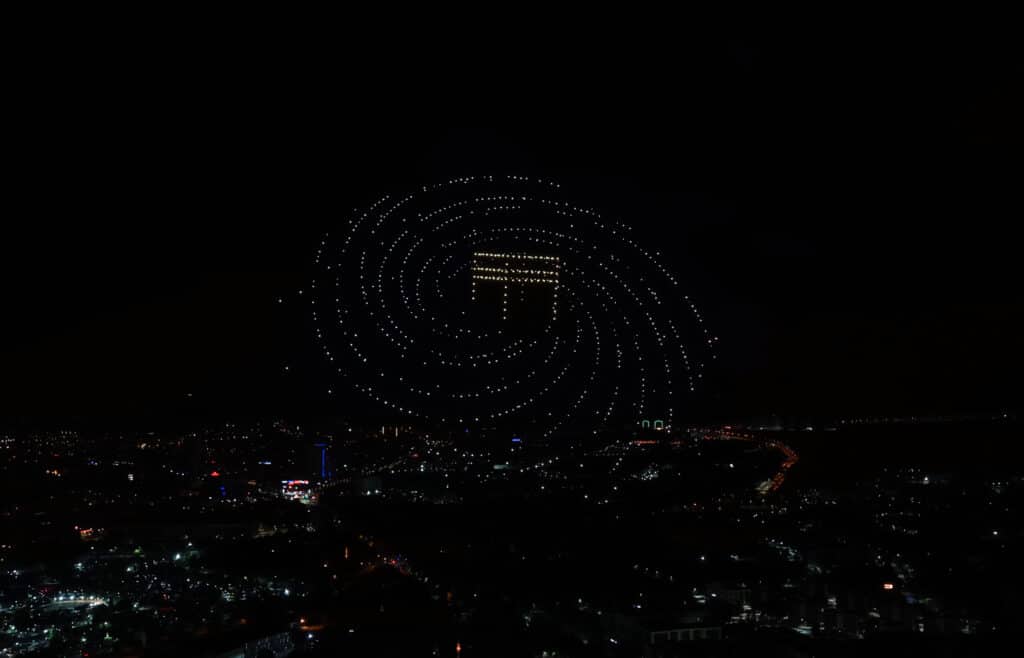
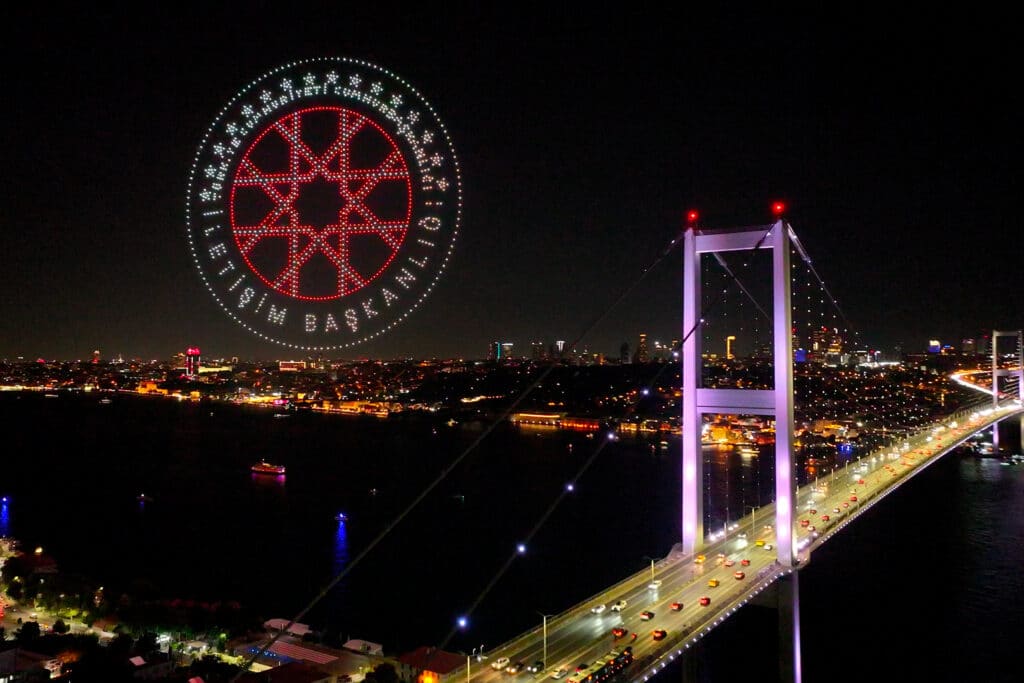
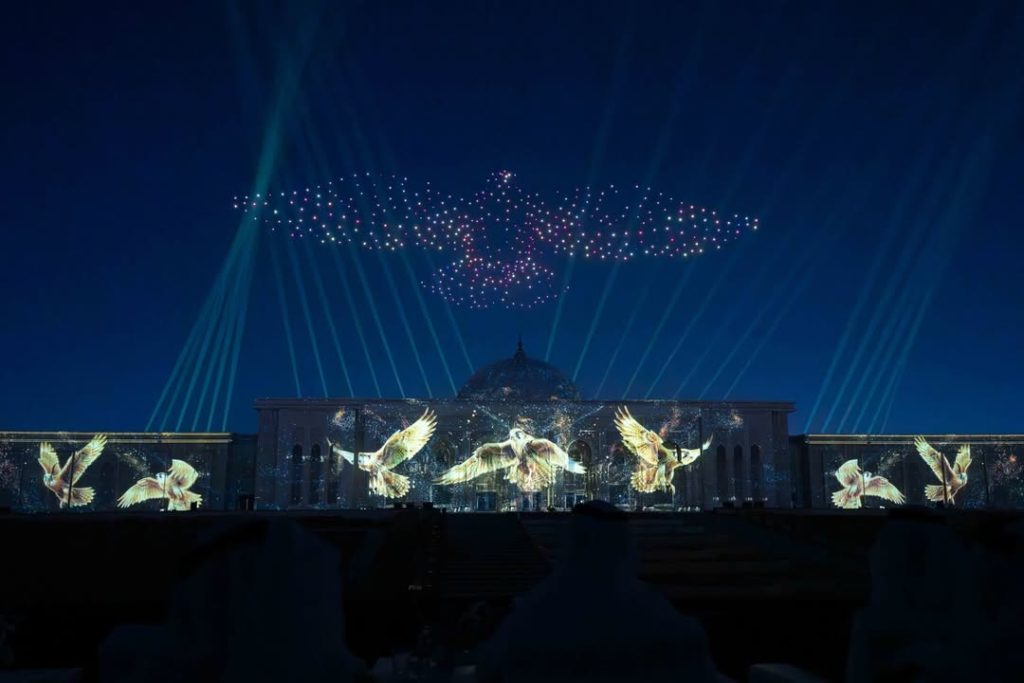
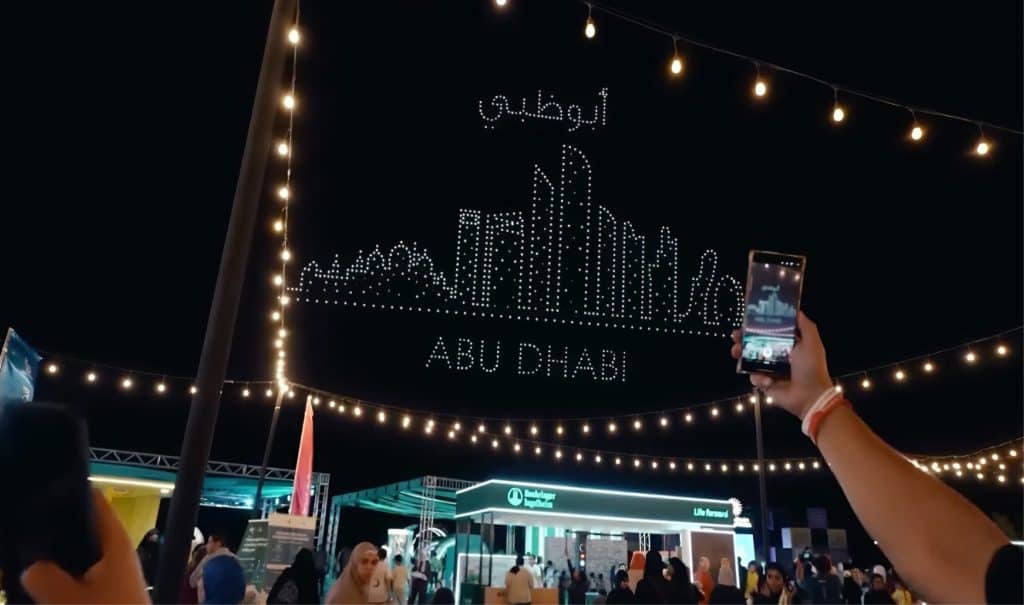
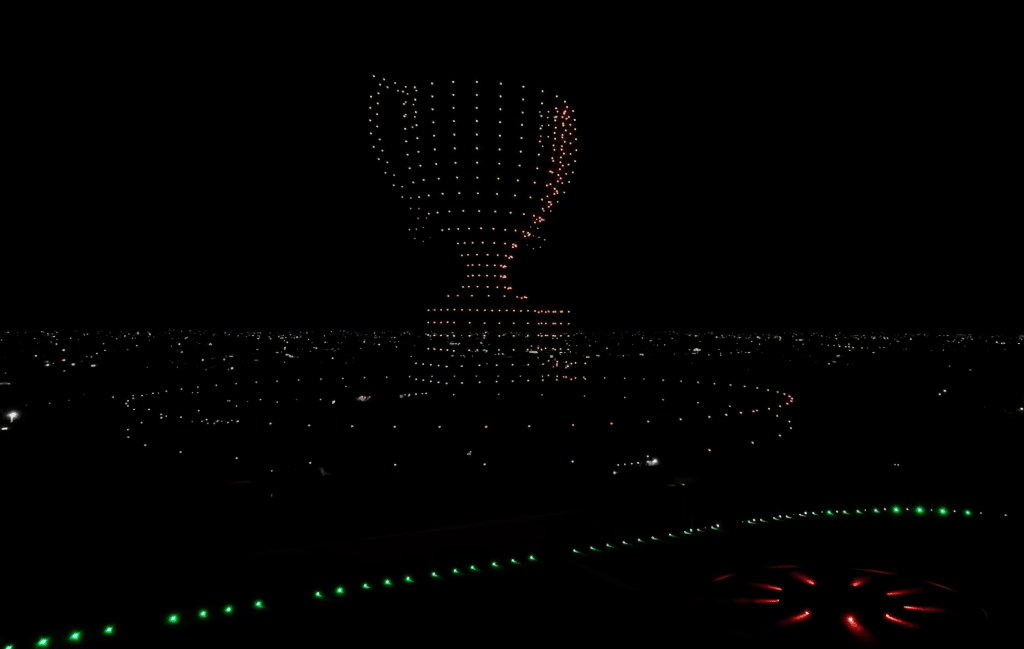
Dronico delivers turnkey outdoor drone shows across the UAE, Saudi Arabia, Qatar, Kuwait, Bahrain and Oman, with a fleet of up to 9,000 drones and shows lasting up to 25 minutes. Our drones fly in winds up to 12 m/s and in temperatures from -10 to +50 °C, which is what makes a show possible on a Gulf waterfront in summer as readily as on a city square in winter. Hundreds of drones form a living canvas in the sky, showing images, animation and branding visible from far away: a way to speak to thousands of people at once, in a language of art and technology. In the UAE, 1,000 of our drones opened the Festival of Health in Abu Dhabi, we closed Oriflame’s international conference in the Abu Dhabi sky, and at Dubai Frame we launched the Voyager card for Emirates NBD and Mastercard. As a guide, an outdoor show costs about $100–200 (AED 370–730) per drone, excluding 5 per cent VAT. The final figure is often determined by the venue and the number of shows. How this works country by country: Türkiye, Saudi Arabia, Doha and Qatar, and by city in the Emirates: Dubai, Abu Dhabi, Sharjah. The permits are set out in outdoor drone shows in the UAE. How the format itself grew, from the first shows to today, is set out in the history of the global drone show industry.
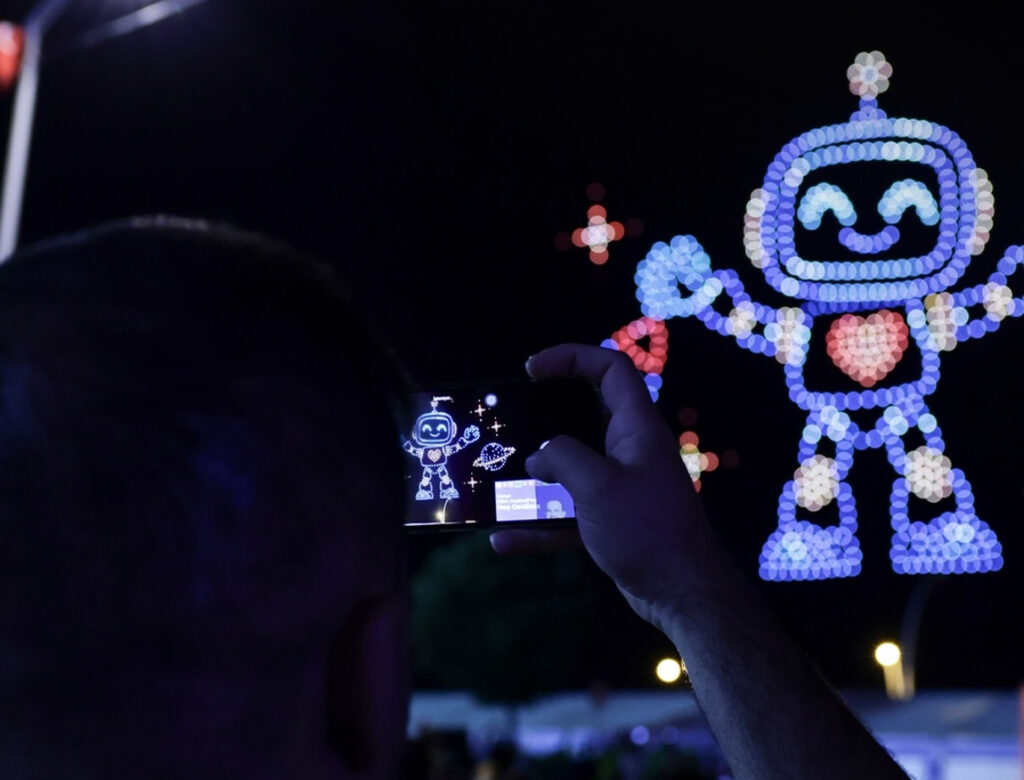
We start with an idea and turn it into a script where every formation and lighting cue serves the story. The result is a performance in which technology works for emotion
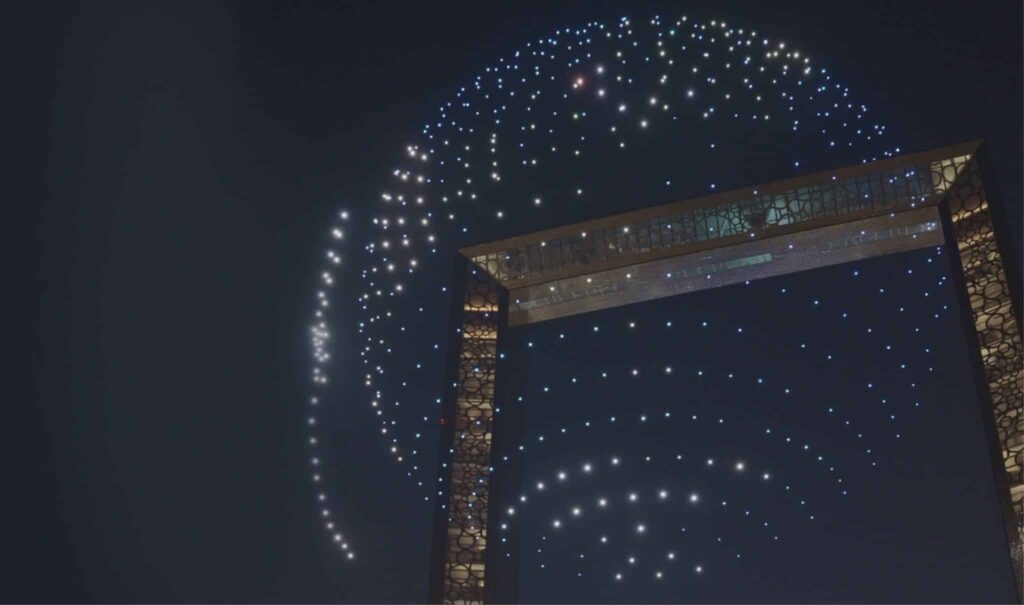
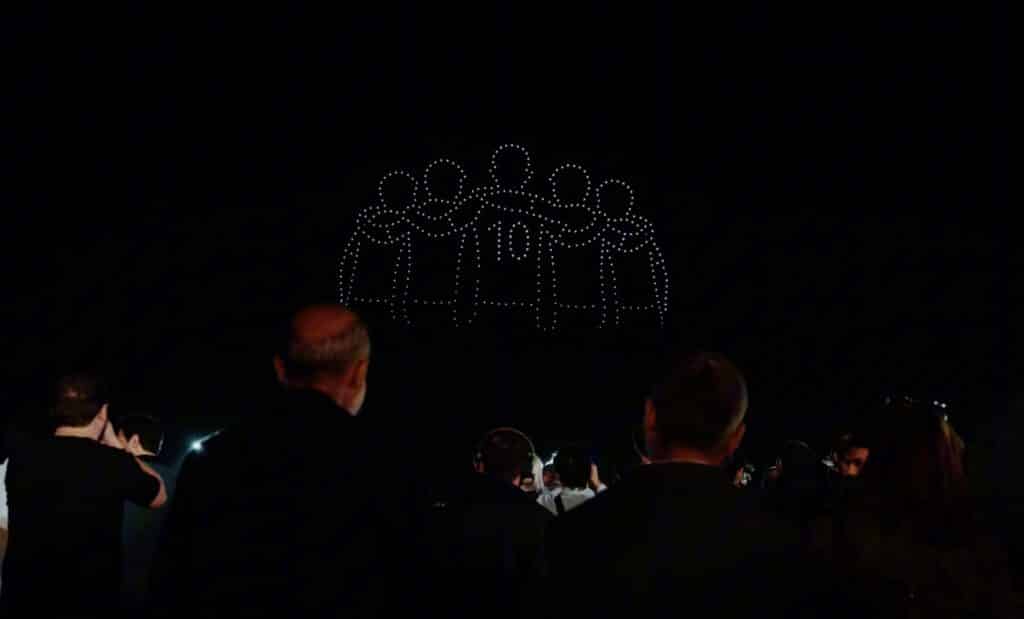
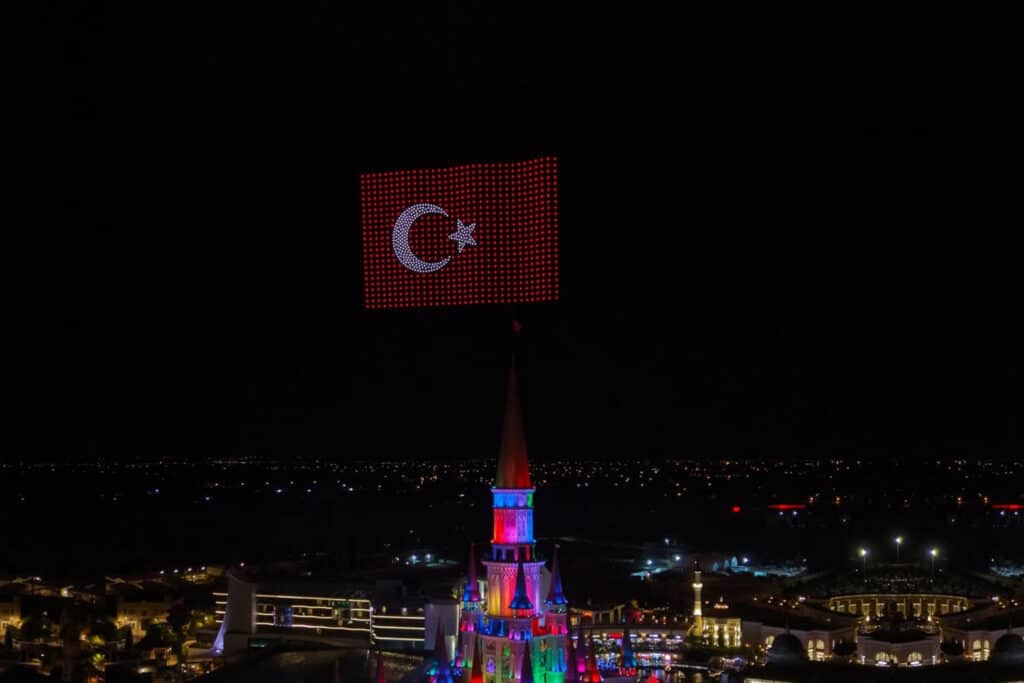
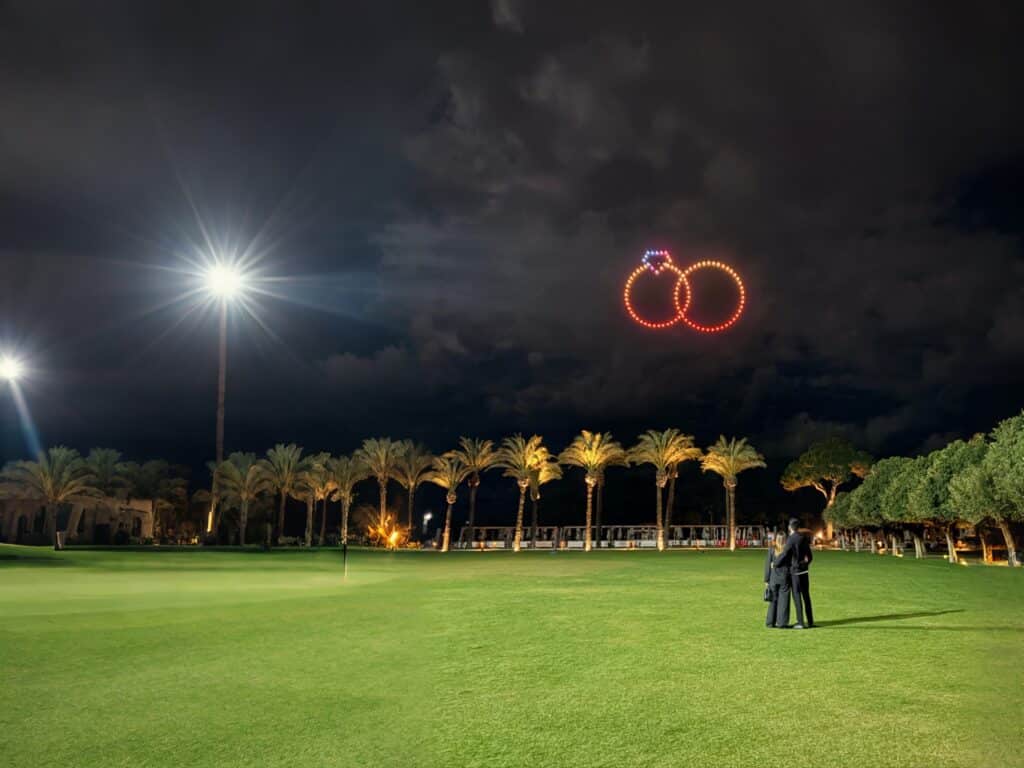
Our shows work on city squares, at brand launches, cultural festivals and private VIP events. We scale the format to the brief and to the size of the audience
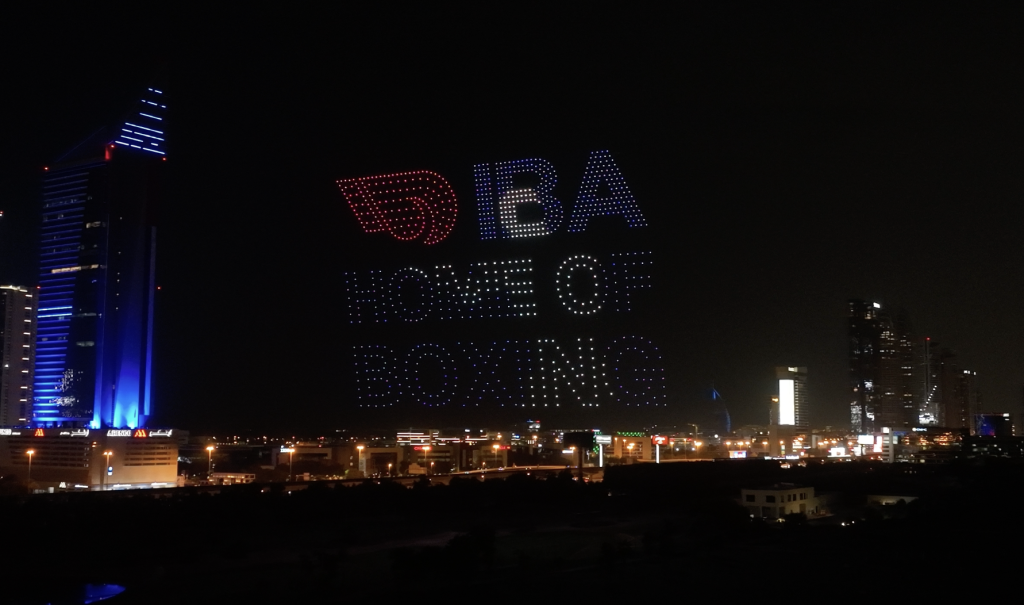
We handle every stage, from virtual modelling to the launch on site. Organisers do not deal with the technical side: they get a finished show

Our process is tight enough to deliver on short notice without cutting quality. Preparation and launch take little time and almost no effort from the organiser

A drone show is more than a visual spectacle: it is the climax of the event. It creates the moment people film, post and talk about later
We define the goals of the show and identify the target audience
We pick the launch site, taking into account local restrictions, weather, permitted altitudes and safety rules
We obtain venue permissions, agree and sign the contract and set the schedule for every stage of development and delivery
We develop the show’s theme and performance script, preliminarily select music and visual effects and create a storyboard that visually narrates the performance sequence
We create the animation the drones will fly and program their flight paths, keeping the show both safe and coherent
We clear the airspace with the national civil aviation authority, the military and other relevant agencies
We secure the take-off and landing zones to the safety requirements for spectators and for the environment, then run technical rehearsals to check communication, battery levels, lighting effects, positioning accuracy and the weather
We perform final checks on weather conditions, GPS signal quality, drone status, control systems and communication continuity between the lead drone pilot, technical staff and event organisers
We fly the show at the scheduled time, then pack down the drones and the control systems















Why a show is an engineering product, not a light effect
What 200, 500 and 1,000 drones look like in the sky
Who issues them, how long it takes and where to start
Requirements country by country, from Qatar to Oman
How flight over people is planned and kept safe
What to prepare so the first quote is close to the final one
An outdoor drone show in the UAE is treated as an aviation operation held as part of an event, so the approvals run as a chain. The order is: choose the emirate and the exact site, obtain the NOC from the site, then start the ground approvals and the aviation part with the General Civil Aviation Authority (GCAA), closing the local procedures of the emirate in parallel. A single project may involve several NOCs from several parties, and each is valid only within its own role.
In the UAE and Saudi Arabia we file the applications ourselves and deal with the authorities directly. Preparing and obtaining the permits is our job, not the client’s.
Dubai adds a local layer on top of the federal one. Flying during an event normally calls for a separate local procedure and an NOC for the event specifically. That is a frequent reason why a project which is technically ready cannot start: the federal part is closed and the local document is not.
Before any of that comes the site. Record not only the name of the venue but the exact launch point, the boundaries of the flight zone and the layout of the audience area, and put them into the site’s NOC together with the date and the time window. If the project includes tests and a rehearsal, their windows belong in that letter from the outset; an NOC covering the show alone leaves readiness at risk.
A flight permit is mandatory, and the altitude the show will run at has to be stated in the application from the outset. If it is not, the default is 120 metres, and an animation fits into 120 metres with difficulty: vertical figures and large scenes simply do not sit inside that frame. The altitude cannot be added on site on the day of the show, so it is worked out together with the design rather than after it.
At Dubai Frame we launched the Voyager card for Emirates NBD and Mastercard. The whole route, from the first document to the conditions that can still stop a show on the day, is set out in outdoor drone shows in the UAE.
A fuller picture of the emirate, from venues and permits to what a show costs, is on our page about outdoor drone shows in Dubai.
As a guide, from the moment the full package is filed: Saudi Arabia, where the application goes to the General Authority of Civil Aviation (GACA), four to six weeks for a standard operation and eight to 10 weeks for a state event or a sensitive zone; Qatar three to four weeks; Kuwait and Oman four to six weeks; in Bahrain the application goes to the Civil Aviation Affairs at least seven working days in advance, while the NOCs themselves take a further two to three weeks. Timescales lengthen near airports, government sites and military zones.
The UAE does not come down to a single figure. The approvals run in two layers, federal and emirate, and the chain starts with the NOC from the site, so the emirate and the exact location have to be settled before it begins. In Dubai, flying during an event normally calls for a separate local procedure and an NOC for the event. In Abu Dhabi, the local layer of safety assessment and of operator approval is more pronounced.
Cancellation on the day is possible even when the permits have been obtained in advance. As a rule this is not the withdrawal of a permit but the absence of confirmation to launch, because the actual conditions do not match the approved ones.
The typical reasons: the site’s conditions have not been met on the ground, or the actual points and perimeters differ from the approved ones; the ground services do not confirm that the perimeters, the crowd control or the access are ready according to the event plan; the actual start time, the duration or the flight zone differs from what was approved; the supporting documents that may be requested during an inspection are not present on site; operational safety restrictions are introduced on the territory or in the air on the day of the event.
The risk can be reduced by running a final check with us and the site in advance: the take-off point matches the approved one, the perimeters are set out in accordance with the plan, the time windows are confirmed, the document package is on site, and the responsible people and their contacts are known.
So that nothing is lost in weeks of back and forth, this data is best gathered in a single letter.
A contact at the site and the site’s readiness to issue an NOC, plus an understanding of who signs that letter and in what format the site draws such documents up – a frequent cause of delay is that no signatory is available, or that the letter goes through a long internal approval. Exact coordinates and a site plan showing where the launch zone will be and where the audience will be. The date and the time window, including the test flight and the build window. The status of the event, whether private or public, and the data the site or the services may ask for, for example the expected number of guests and the proposed layout of the perimeters.
What not to expect: we cannot guarantee a date without an NOC from the site and final coordinates for the take-off point, and changing the site a few days before the show almost always affects the approvals.
Our drones operate in winds up to 12 m/s, in light rain and in temperatures from –10 °C to +50 °C, which covers the summer heat of the Gulf. The final decision to launch is taken on the day of the show, after the weather on site has been assessed.
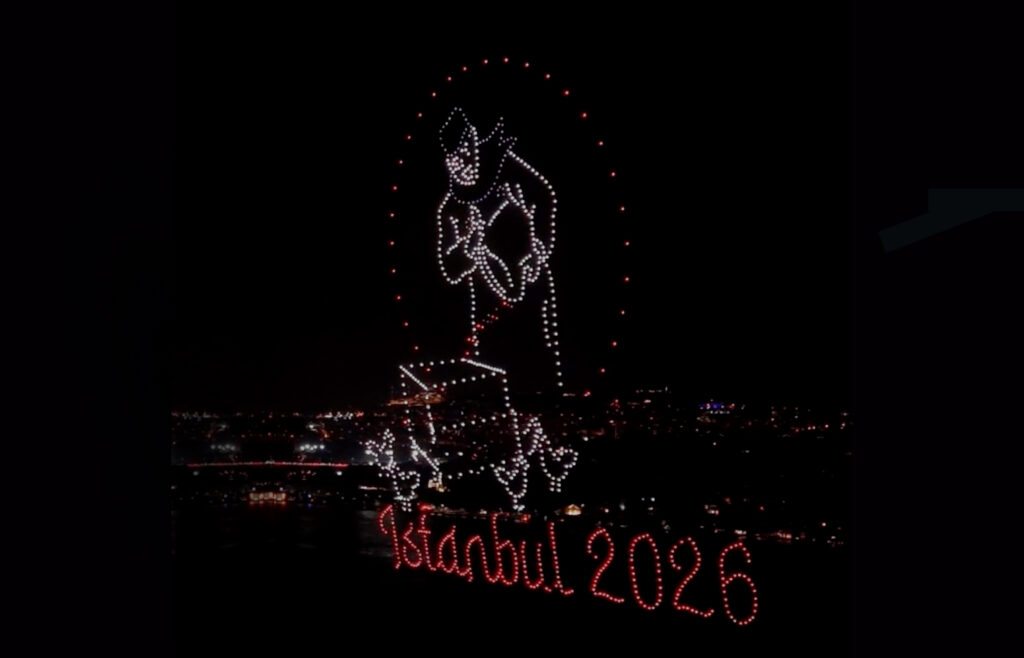
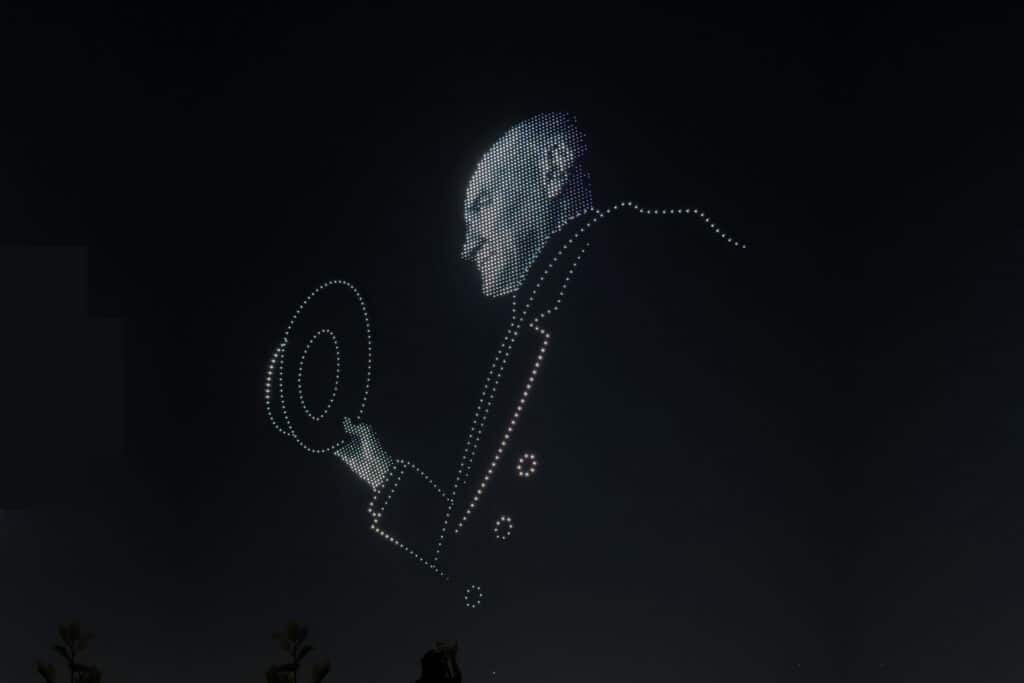
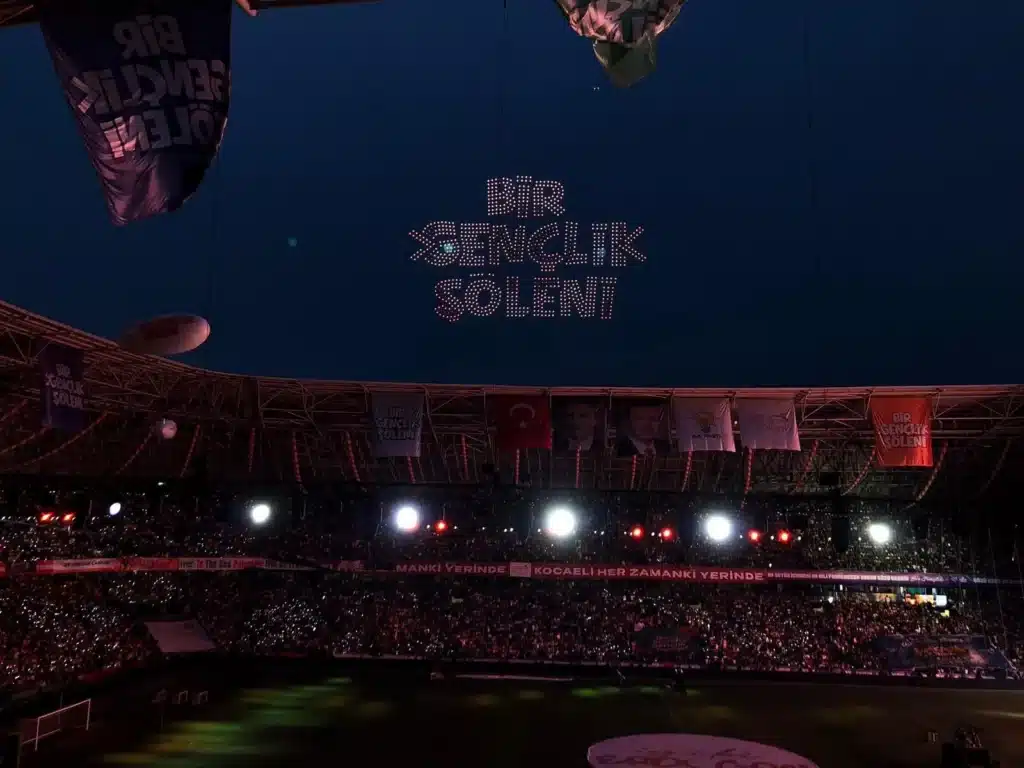
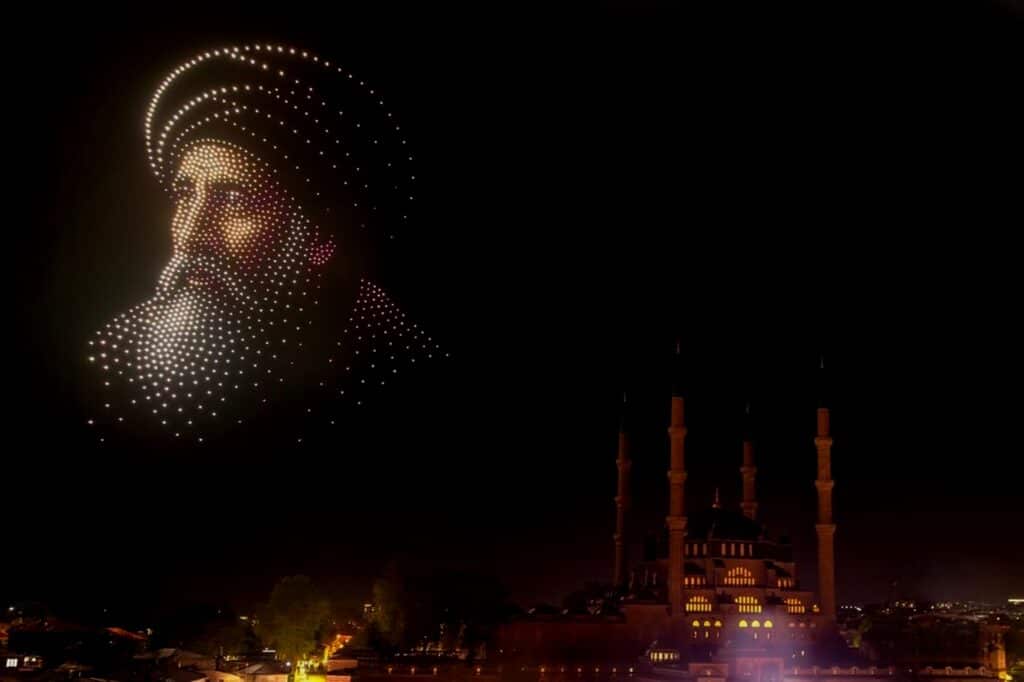
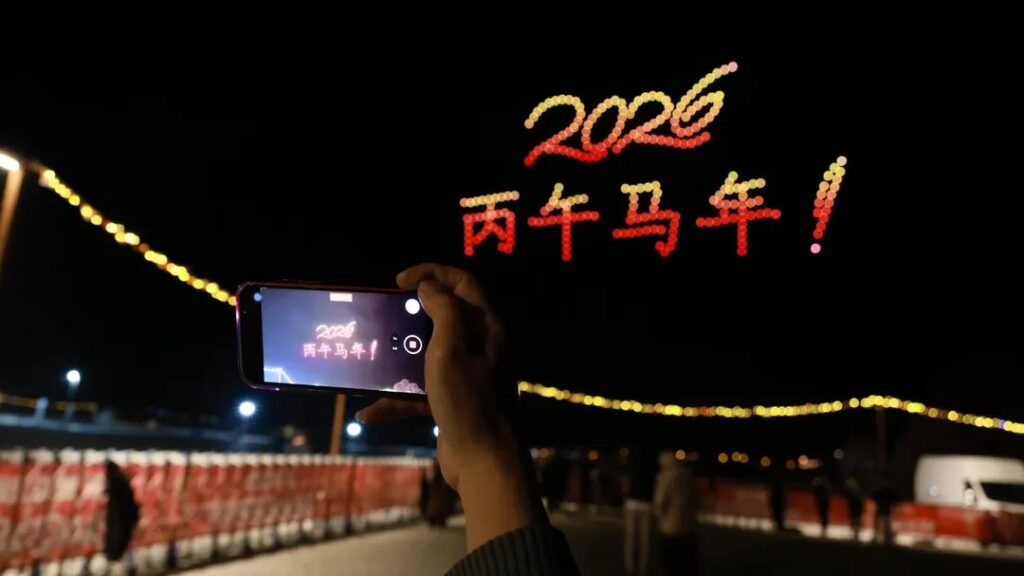
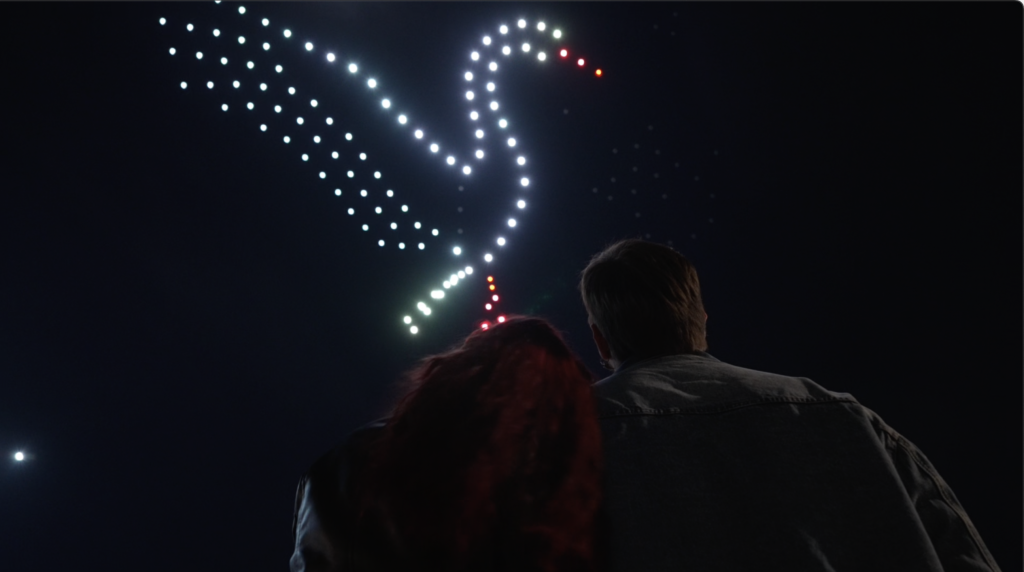
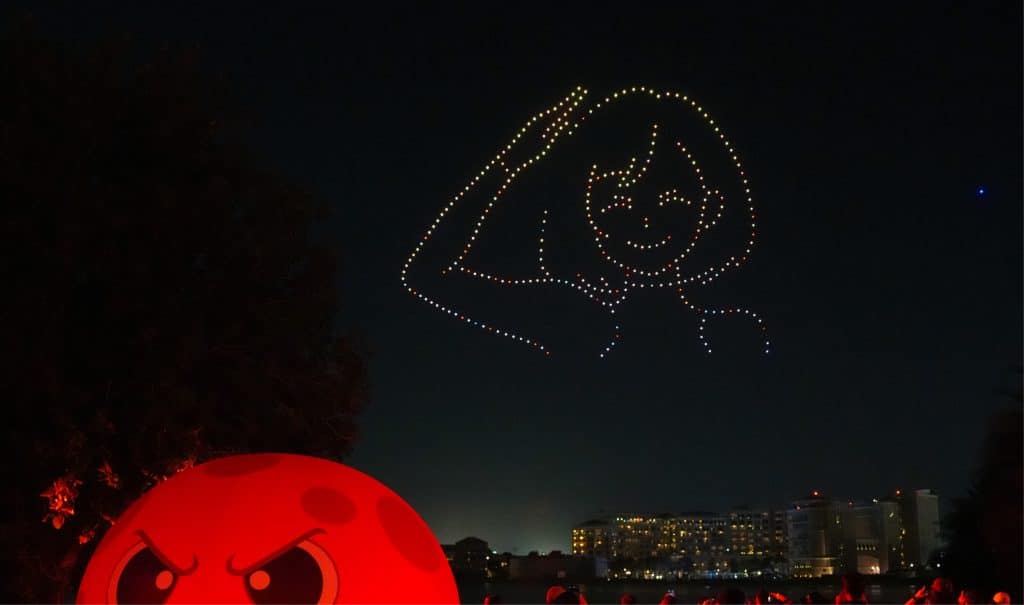
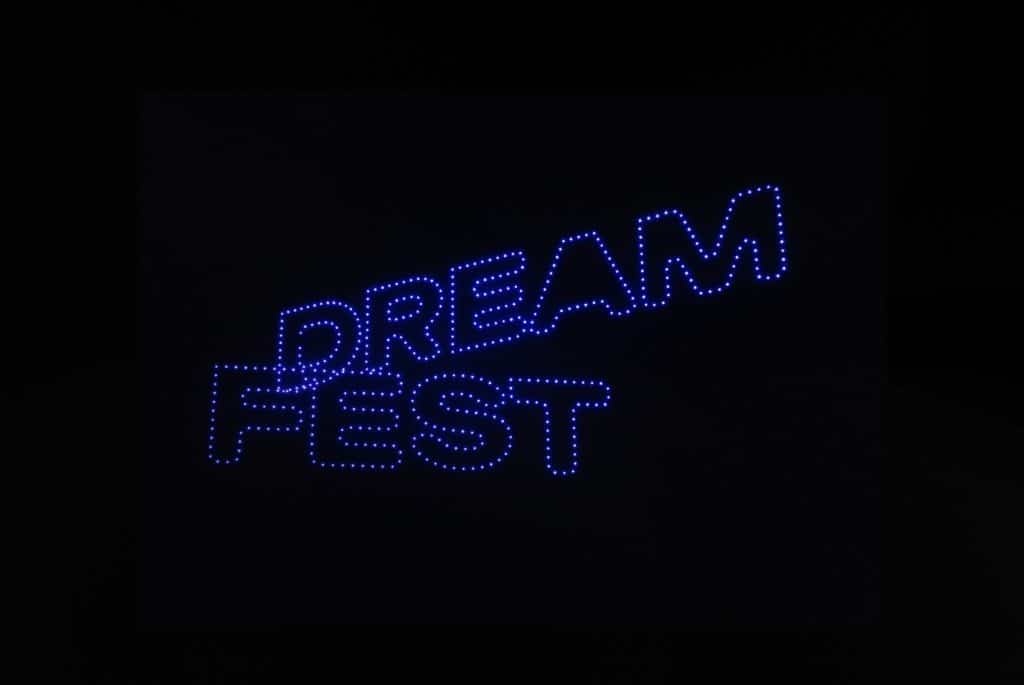
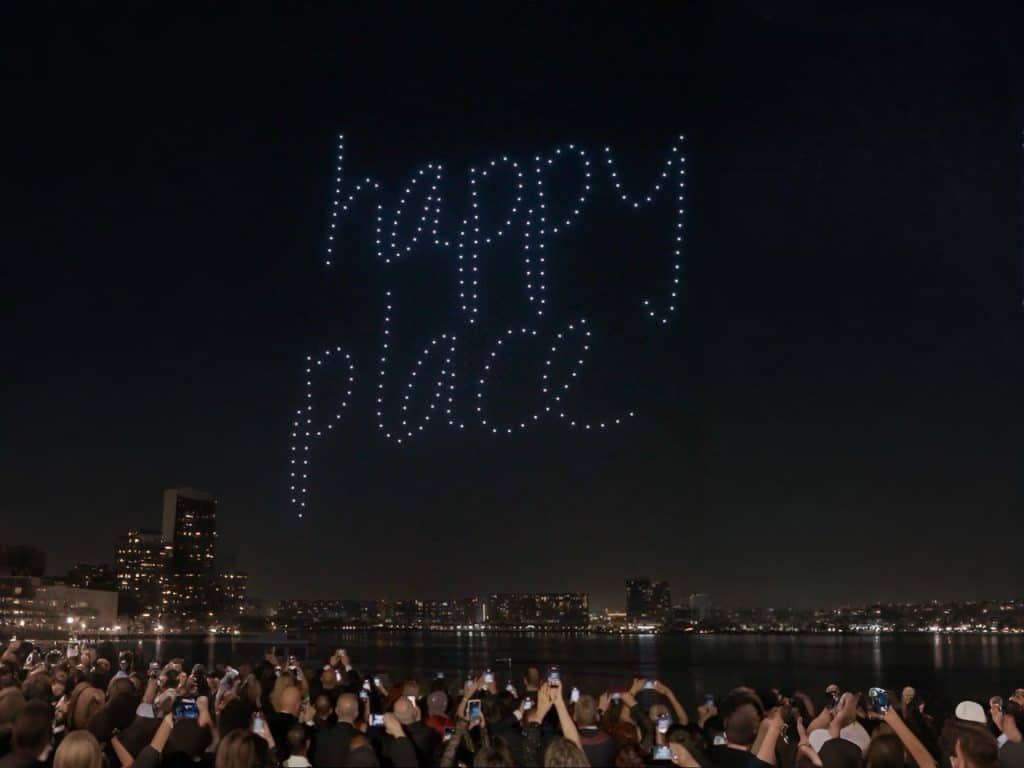
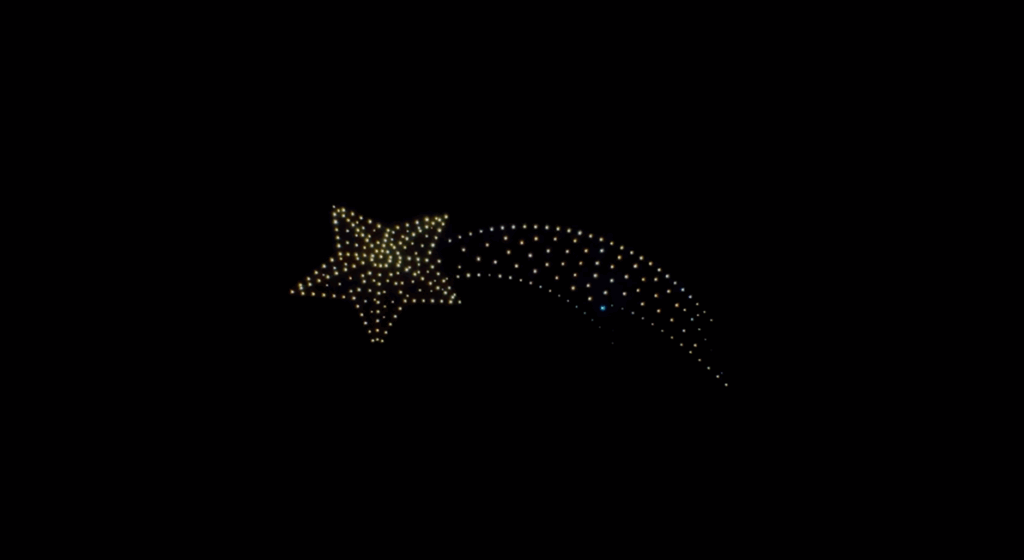
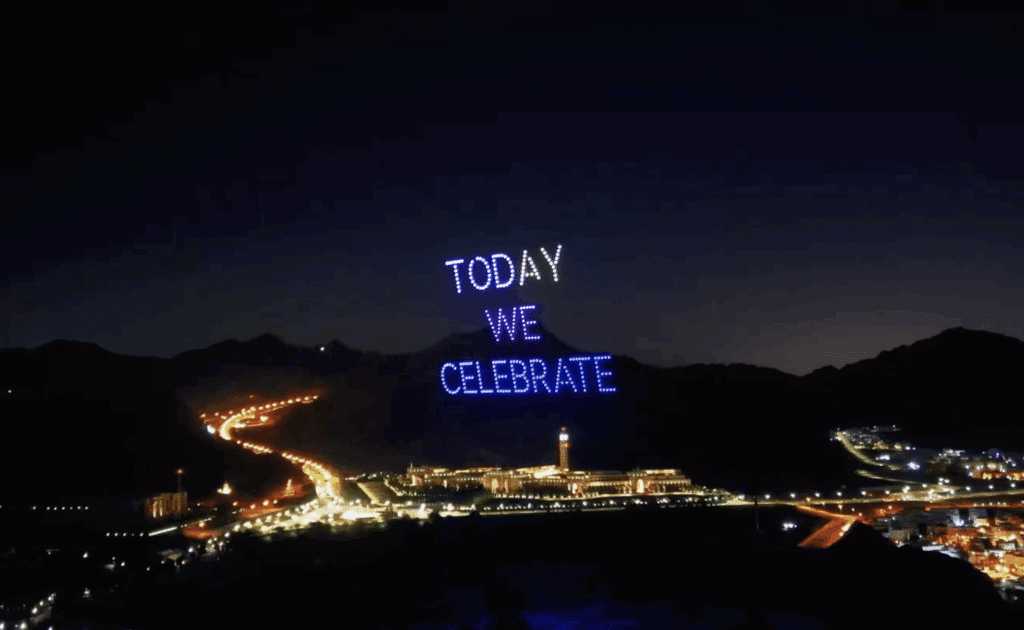
The number of drones sets what the animation can do, not just how big it looks. Fewer drones give sparer, graphic images that read beautifully at private and civic events. Portrait compositions begin to look convincing from 1,000 drones, because the likeness needs proportions rather than a silhouette. Text is the demanding part: allow 15 to 20 drones per letter, and often more.
The launch and technical areas are fenced off physically, with only the working crew inside the perimeter and security outside it. Around the drones set out on the ground we keep a buffer of some 50 metres, so that nothing strays in and the return zone stays controlled. There are no people where the drones take off, transit, perform or land.
As a guide: about $100–200 (AED 370–730) per drone. The final figure is often determined by the venue and the number of shows. The rate per drone goes down as the show gets larger. It also depends on the number of drones, the complexity of the performance, the number of take-offs and even the time and day of the week.
For an exact figure, please talk to our sales team. We will ask about the venue, the dates, the audience and what the event has to achieve – that is what the final number depends on.
All prices are indicative and every project is quoted individually. Prices exclude 5 per cent VAT in the UAE.
The final cost of a drone show may be affected by transportation of drones, customs clearance, crew technical and hospitality riders, flight permits, rental of launch sites, pyrotechnics or other supplementary equipment used with the drones.
Public liability is insured for two million US dollars, and the cover is worldwide. In the countries where we have representative offices, the UAE, Saudi Arabia, Türkiye and India, we obtain the flight permits ourselves and carry the approval process with the aviation authority. Elsewhere the permit is obtained by a local partner company under its own jurisdiction, and we prepare the package for approval: coordinates, altitudes, the time window and the safety plan. Our pilots are licensed and the equipment is backed up.