Sport no longer sells the game: it sells attention
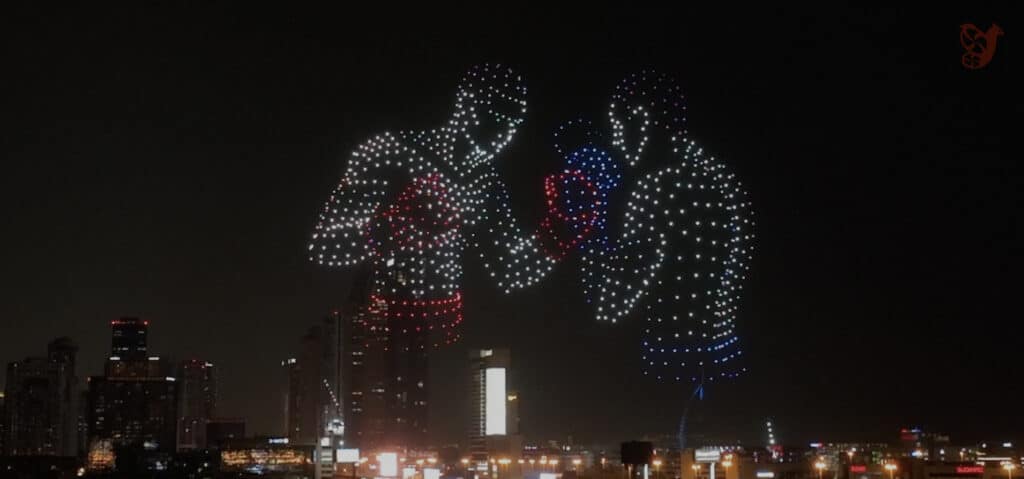
Not long ago sport was a self-sufficient product. The match, the result, the emotion in the stands. That was enough to gather an audience and to hold its interest.
Today it is not.
Sport is competing not only with other sports. It is competing with YouTube, with streaming platforms, with social media and with any content a person can open on their phone at any moment. And in that competition the key resource is no longer the game.
The key resource is attention.
And that is not an abstraction. It is a measurable quantity, and it converts directly into reach, into views, into the price of brand integrations, into ticket sales and into the economics of events.
From advertising to producing attention
You can see how the model works clearly in Red Bull.
It is one of the few brands that built global recognition not through conventional advertising but through systematic work with content and events. On published figures, Red Bull’s audience on social media exceeds 100 million people, and total views of its content reach more than 10 billion a year. The company runs thousands of events and activations annually, directing up to 30 per cent of its marketing budget specifically to content and events.
That is not accidental success. It is a model.
The brand acts as a media company.
The events become content.
The content creates reach.
And the reach then turns into money.
Red Bull no longer buys attention. It produces it, systematically.
What matters is that this is not about a particular technology or a single tool. It is about an approach to managing attention.
Events as engines of an economy
This logic went beyond the world of brands long ago and is now applied at the level of cities and event ecosystems.
According to the OECD, the creative industries account for up to 5 per cent of global GDP. UNCTAD calls them one of the fastest-growing export sectors, ahead of traditional industries. UNESCO records a threefold to fourfold return on investment in cultural and event projects, through the multiplier effect on tourism, employment and infrastructure.
Further research shows that events have a direct effect on how content spreads. According to Eventbrite, 78 per cent of attendees share content on social media, widening its reach and raising the profile of the place.
Which means an event stops being local.
It becomes part of the media space.
Cities as media platforms
And that is exactly why cities are starting to use events not as one-off activity but as a systematic tool of the economy.
Chongqing in China is a good example.
A series of regular shows, drone shows among them, drew around 4 million spectators. Restaurants saw growth of up to 80 per cent, hotel occupancy passed 80 per cent, retail rose by roughly 20 per cent and hotel prices in the key areas went up by 25 per cent.
What matters is that this is not a single event.
It is systematic work with attention and with the flow of people, and it has a direct effect on the economy of the city, including out of season.
The part the wow effect plays
And at the centre of that system is the wow effect.
But one qualification matters here.
The wow effect is not a technology.
It is a result.
It can be created in different ways. Through dynamic mapping, through immersive spaces, through digital screens, through working with the audience as a living pixel or through solutions in the air.
Dynamic mapping, for example, is used today at the largest venues, where buildings or stadiums become part of the visual script and come alive on the broadcast. Immersive spaces, projects on the scale of Sphere in Las Vegas or TeamLab, create the effect of complete immersion, with the viewer inside the content. And in stadiums, interactive solutions are used more and more often: light wristbands, for instance, which turn the audience into part of the visual show.
There are many technologies. The task is one.
To capture attention and turn it into content.

Why most events do not scale
Look systematically at what is happening, and any strong event today has a fairly clear mechanism behind it.
It looks simple:
attention → content → reach → popularity → economics
First the event attracts attention. That may be the format, the scale, the visual solution or the idea itself.
Then that attention turns into content. The audience films what is happening, the broadcast captures the key moments and the media pick up the visually strong episodes.
The next stage is reach. The content spreads through social media, through platforms and through the press, travelling far beyond the venue.
Reach creates popularity. The event starts being talked about, looked forward to, sought after; brands and places want to be associated with it.
And it is at that level that the economics appear. Ticket sales, the interest of sponsors, growth in attendance, tourism, use of the infrastructure.
What matters is that there is not one superfluous link in that chain.
Lose attention and no content appears.
No content, no reach.
No reach, no economics.
And this is exactly where the wow effect plays its key part.
It is not an end in itself.
It is the entry point into that chain.
It is the wow effect that starts the process. It makes the event noticeable, sets it apart from dozens of others and gives the audience a reason to take out a phone and start filming.
In essence, it is the moment at which an event becomes a media product.
Why the air matters
Because today an event no longer lives at the venue alone.
It begins there, but it goes on existing in the digital environment. In the broadcasts, on social media, in the content the audience makes.
The viewer has stopped being simply a viewer.
They have become a participant and, at the same time, a channel of distribution.
And that is a fundamental change.
Where organisers used to work with the audience inside the venue, today they work with an audience that is potentially tens or hundreds of times larger, through digital distribution.
Which is exactly why visual and technological solutions come to the fore.
They stop being an element of decoration and become a tool for working with attention and content.
There is a fairly wide set of such tools today.
Dynamic mapping, where buildings become part of the visual script.
Immersive spaces, which take the viewer inside the content.
Interactive solutions, where the viewer becomes part of the visual picture.
Digital screens and environments, which create a fully controlled visual space.
And among those tools the air holds a particular place.
Not because it is a new technology.
But because it fits the logic of that chain more precisely than anything else.
The air is not bounded by the frame of a screen or a stage.
It is seen by thousands of people at once.
It goes into the broadcasts and the filming automatically.
It scales, and it creates visual images that are hard to ignore.
And most importantly, the air does not compete with the screen; it becomes part of the space.
Which is why airborne technologies are becoming one of the most effective entry points into this system.
From spectacle to media mechanism
Look at the largest events in the world and it becomes obvious that airborne technologies are not used as effect for the sake of effect.
They are built into a system of working with attention, content and media.
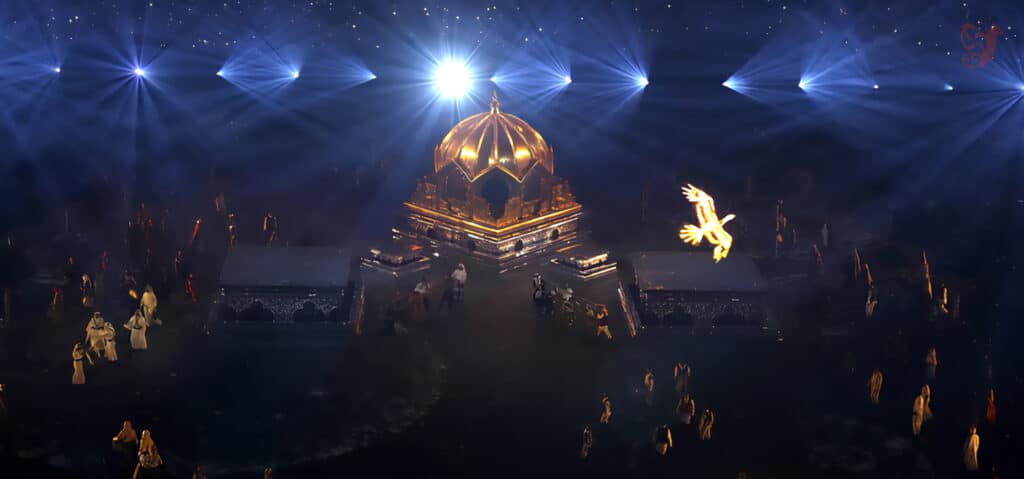
The opening ceremony of the Olympic Games held in Tokyo in 2021 became one of the clearest examples of how airborne technologies work not only for the stadium but for global media reach. There were 1,824 drones in the sky, forming the emblem of the Games and a three-dimensional globe.
But the key value here is not in the show itself.
According to the International Olympic Committee, the Games drew more than 3 billion viewers on television and digital platforms, and the total number of video views passed 28 billion.
In that system a drone show works as an element of global media content.
This is not a story about the spectators in the stadium.
It is a story about a visual product that travelled around the world and became part of the digital reach of the Olympics.
Similar logic works in commercial sport.
The opening ceremony of IPL 2023 in Ahmedabad, India.
The venue was the Narendra Modi Stadium, one of the largest stadiums in the world, holding around 132,000 spectators.
But here too the main value lies beyond the stands.
According to JioCinema, more than 120 million unique viewers watched the final, the season delivered over 17 billion views, 26 sponsors and more than 800 advertisers were involved and the app received more than 25 million downloads in a single day.
In that context a drone show becomes part of a large commercial product, one that strengthens the broadcast, raises engagement and makes the event more valuable to brands.
At the level of club sport this logic becomes more practical still.
Regular drone shows at LA Dodgers season games, United States.
Here the drone show does not exist separately from the match; it becomes part of an extended event product, where the game itself, the partner integrations, the fan activations and the post-match visual show come together into a single whole.
Formats like these are used regularly as part of match days and become part of the post-match show, strengthening the overall experience for the audience and increasing the value of a visit to the stadium.
In that model an airborne solution works not as decoration but as part of how the event is packaged and sold.
Airships as long-term attention infrastructure
Airships deserve a mention of their own as a class of airborne solution.
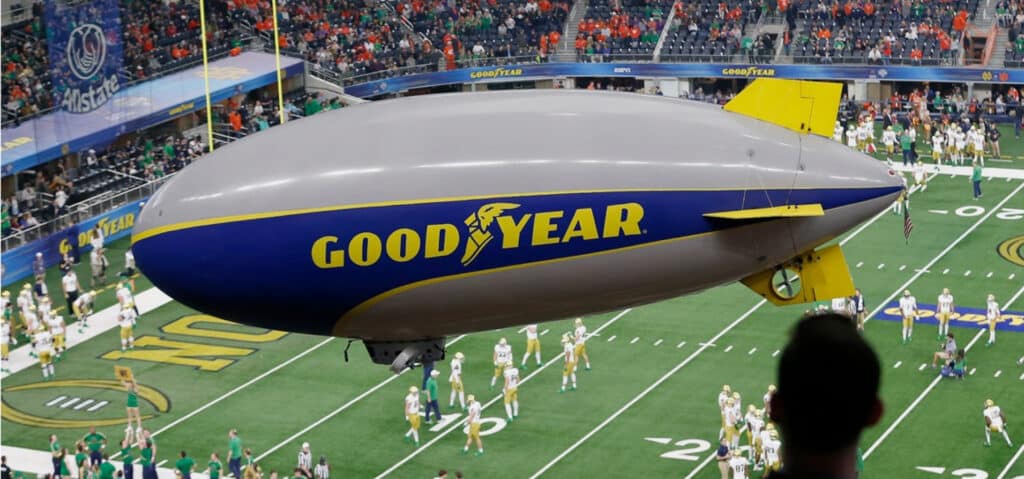
The Goodyear airships are a separate and very important class of airborne solution in sport.
This is not about a one-off show but about a model that has been working for more than 100 years. The key stage of Goodyear’s involvement began in 1955, when the airships started being used to film the Rose Bowl in the United States.
Since then the airships have supplied aerial coverage of more than 2,000 sporting events and have become, for decades, part of the visual language of American sport.
This is a fundamentally different way of working with attention.
Where a drone show more often works as a culmination, an airship works as a permanent media platform, a platform for aerial filming and a symbol of the standing of a big match.
One thing matters in all of these examples.
Airborne technologies do not exist separately from the event.
They become part of the media product.
They strengthen the key moments, they create visual images that go into the broadcasts and onto social media, and in doing so they increase the overall reach of the event.
Which is why their use is growing not as a trend but as a logical development of the industry.
From a one-off effect to a systematic model
Step outside individual events and look at the wider context, and it becomes clear that work with attention moved to the level of systematic solutions long ago.
This is particularly noticeable at the level of cities.
Events are used not as one-off activity or a celebration for the sake of it, but as a tool for managing an economy. And not only at peak periods, but between seasons, when the task is to attract a flow of people and even out demand on the infrastructure.
China is one of the most telling markets in this respect.
There, events and visual formats, drone shows among them, are used regularly and built into city strategy. These are not separate festivals but continuous work with an audience.
An event stops being a single point and becomes a tool that works over time. A format like that creates a steady flow of visitors and affects the economy across several segments at once.
And in that model the wow effect plays the key part.
Because it is what makes an event noticeable. It is what gives people a reason to come, to watch, to film, to share. It is what turns local activity into a media product that travels beyond the city.
In effect, cities are starting to work the way large brands do.
They create content.
And through that content they manage attention, and with it the flows of people and money.

How this works in our own projects
In practice this logic is borne out in our own projects, where we deliver airborne solutions as part of sporting events at every level, from international tournaments to club matches.
On international projects it is particularly clear at events in the Middle East. We delivered drone shows as part of the ceremonial scripts at the opening of the Doha Equestrian Tour 2026 season at Al Shaqab in Qatar, for example and at the opening of the Al Shira’aa Horse Show Tour 2026 in Abu Dhabi. On projects like these, what matters is not only the visual effect but the precision, the safety and the integration into the staging of the event.
Major international tournaments are a level of their own. For the opening of the FIFA Arab Cup 2025 in Qatar, we worked on the airborne part of the show, integrating the solutions into the overall structure of the ceremony. Here it is no longer a question of a local wow effect but of the visual language of an event broadcast to an international audience.
At the level of club and mass sport, this logic works no less effectively. Take the projects in Türkiye, and the Galatasaray championship in Istanbul in 2025 in particular, where our solutions were used in the script of the celebration and strengthened the emotional peak of the event, turning it into content that spread well beyond the stadium.
In all these cases the tasks were different, but the logic stayed the same. We used airborne technologies to create visual moments that became content and travelled beyond the venue.
It is also worth noting that we deliver solutions like these in very different conditions, from open stadiums to enclosed arenas. That calls for different engineering approaches, for work on safety and for deep integration into the script, while the key task stays the same: managing attention.
And it is in practice that you see most clearly that airborne technologies are not an effect in themselves but a tool that adapts to the task and to the format of the event.
In this context airborne technologies work not as a separate element of the show but as a way of strengthening the key moments.
The opening, the finale, the awards, the culminating points: those are the points where the main visual content of an event is formed. And that is where it is important to create the wow effect that will travel afterwards.
Through it the event goes beyond the stadium.
It starts living in the broadcasts, on social media, in the press.
And that is the moment at which additional value appears.
Not by increasing the number of spectators in the stands, but by widening the audience through content.
This is what we see regularly on international projects.
Airborne solutions strengthen the visual side of an event, create recognisable images and produce the very moments that afterwards travel through the digital environment.
Different tools, different roles
Talk about airborne technologies in practical terms and it is important to understand that this is not one tool but a whole set of solutions, doing different jobs inside an event.
One thing unites them: work with attention. But it is delivered in different ways.
The first and most visible format is the drone show.
Drones give movement, scale and the ability to create complex visual images in the air. This is a tool that works best at the key points of an event: the opening, the finale, the culmination.
In around 90 per cent of drone shows today the drones are simply points of light forming images in the sky. The next stage of development is the move to physical objects and to deeper integration into the script, where the audience sees not abstract graphics but images they can read.
Through movement, synchronisation and the ability to form images in space, a drone show creates the visual content that then goes into the broadcasts and onto social media.
What matters, though, is that in most cases drones are used not as a product in themselves but as part of an overall script.
It is also important to allow for the limits set by safety, weather and airspace regulation, which bear directly on the format and on how the technology is used in the script.
Drones strengthen a moment, and it is those moments that most often become viral content and travel beyond the event.
The second format is airships.
This is a fundamentally different logic.
Where drones are movement and culmination, an airship is sustained presence. It can stay in the space of an event for hours, working as a platform for a brand, as an element of the decor and at the same time as a platform for filming.
In effect it is a flying media platform.
It is constantly in the audience’s field of view, it goes into the broadcasts and it forms a stable visual image of the event.
Which is exactly why airships have been used in sport for so long: they are not an effect but attention infrastructure.
They work not in a single moment but across the whole event, constantly in the field of view of the audience and the camera, forming a steady presence of the brand and of the event in shot.
The third format is custom flying objects.
This is the most flexible tool in terms of integration.
Unlike drones, which more often create abstract or graphic shapes, custom objects make it possible to carry specific images into the air: characters, elements of a show or of a brand.
That gives a completely different level of engagement, because the audience sees not an abstract shape but a recognisable image they already have an emotional connection with.
And because of that, solutions like these are remembered better and appear more often in the content the audience makes.
When the technology becomes part of the story
It is also worth noting that airborne technologies can be part of the sporting action itself.
This is particularly visible in ice shows, where a staged number is already part of the sporting spectacle.
On projects like these, airborne solutions become an element of the choreography, of the storytelling and of the stage action. They do not decorate the event from the outside; they are integrated inside the number.
In practice this is clearest in ice shows, where airborne solutions become part of the staged number.
In our own projects that has meant drone shows on the ice, custom flying objects, the drone ship in Alina Zagitova’s show ‘Assol’, the flying drone fairy and the radio-controlled butterflies in Tatiana Navka’s ‘Cinderella’, and drone shows on the ice in ‘Keepers of Time’.
Elements like these work neither as advertising nor as a technical attraction.
They become part of the action, part of the choreography and part of the emotional peak of the number.
That is where their particular value lies for sport and spectacle formats.
And that is where the wow effect arises not only around the event but inside its artistic structure.
In practice it is the combination of these formats that gives the greatest effect.
Drones create scale and movement.
Airships provide presence and visual stability.
Custom objects add meaning and recognition.
And the choice of tool is always determined by the task.
If the task is to create a culminating moment and a visual peak, one format is used.
If sustained presence for a brand and work in the broadcast are needed, another is used.
If deep integration into the script and the story is required, a third.
Which is why airborne technologies cannot be treated as effect for the sake of effect.
They are a set of tools that make it possible to manage attention at different stages of an event.

Three layers of impact
Look at sporting events through the lens of attention and it becomes clear that airborne technologies work not at one point but at several levels at once.
And that is exactly why they have the effect they do.
The first level is global media reach.
The largest events today live not in the stadium but in the broadcast. The Olympics, the world leagues, the major tournaments: their main audience is outside the venue.
And that is where visual solutions are aimed.
Any strong moment that goes into a broadcast automatically becomes part of global content. It travels across social media, it reaches the press and it shapes how the event is perceived.
Airborne technologies in that context are a tool for creating such moments.
They give scale, geometry, movement and visual images that read well on screen and stand out from standard content.
Which is why they are used at the Olympics, in the major leagues and at international tournaments.
This is work not for the viewer in the moment but for millions of viewers in the media space.
The second level is the stadium and the live audience.
Here the task is different.
Not simply to attract attention but to hold it.
The modern spectator does not come only for the game. They come for the experience. For the emotion, for the atmosphere, for the moments worth remembering and worth capturing.
And this is where airborne solutions strengthen the key points of an event.
The opening, the intervals, the finale: those are the moments where the emotional perception is formed. Those are the ones the audience films and takes away.
If there is a strong visual effect at those points, the event is perceived differently.
It feels richer, more contemporary, more expensive in the impression it leaves.
And that bears directly on whether the audience comes back.
The third level is commerce and partner integrations.
And this is one of the most underrated aspects.
Any modern sporting event is not only about an audience but about brands. Sponsors, partners, advertisers.
And what matters to them is not simply being present but the format of the integration.
Airborne technologies make it possible to make that integration native and visually strong.
Logos, symbols, images: all of them can become part of content that people actually watch and share.
Unlike conventional advertising, which is often ignored, integrations like these work inside the wow effect itself.
And because of that they get a far greater response.
What we end up with is a system in which the same tool works in three planes at once:
- it creates global media content
- it strengthens the experience of the audience on site
- it opens additional commercial possibilities
And that is where the multiplier effect that the creative industry talks about comes from.
Where the industry is heading
Look at the current stage of the industry and it becomes obvious that we are at a point of transition.
Airborne technologies are ceasing to be only an element of a show and are starting to become part of the infrastructure of sporting events.
That is an important change.
A few years ago drones were used mainly as a visual effect within opening or closing ceremonies. Today they are starting to be integrated into the consumption of sport itself.
One telling example is the use of FPV drones in broadcasts.
At the Winter Olympic Games of 2026 in Milan, drones became for the first time not an experiment but a fully fledged tool of content production. They were used alongside traditional cameras, they worked inside the sporting disciplines and they gave new angles that had not been possible before.
According to OBS, more than 6,500 hours of content were produced using FPV drones alone.
That is a fundamentally new level.
The air is becoming not only a stage but a camera.
Not only a decoration but part of the language of the broadcast.
And that changes how sport is perceived.
Where the visual language of sports broadcasting used to be fairly conservative, it is now beginning to transform quickly. New angles are appearing, new dynamics, new ways of drawing the viewer into what is happening.
That bears directly on how engaged the audience is.
And it is important to understand that this is not a one-off story or a wow experiment.
It is the natural development of the whole industry.
Because the logic stays the same:
attention → content → reach → economics
The tools are simply becoming more deeply built into the product itself.
Where the wow effect used to be created around an event, it is now starting to form inside it.
And that opens entirely new possibilities.
For organisers, the possibility of creating a richer and more contemporary product.
For audiences, a new level of experience.
For brands, integration into content that people actually watch.
Local conditions have to be taken into account as well.
In a number of countries, for instance, there are restrictions on the use of airspace and those affect the formats in which the technologies can be used. But that does not stop development.
In practice it leads to new solutions: indoor shows, custom objects, hybrid formats that make it possible to work with attention even in restricted conditions.
The logic itself does not change.
The forms of delivery do.
And look at the market as a whole and it becomes obvious that airborne technologies have already taken their place in the system of sporting events.
They are used at the largest venues in the world, they are integrated into broadcasts and they are becoming part of commercial models.
This is no longer an experiment and no longer a trend.
It is the new normal.
What it comes down to
Put it all together and it becomes clear that the changes taking place in sport and in events are not isolated but systematic.
It is not only the visual side that is changing.
The very logic of how value is created is changing.
Sport no longer sells the game alone.
It sells the attention around it.
And it is that attention which becomes the main resource, converting into views, into reach, into the interest of an audience, into partner integrations and into the economics of events.
In that system the wow effect stops being decoration.
It becomes a tool for managing attention.
And it does not matter which technologies create it.
It may be mapping, immersive spaces, work with the audience, digital environments or airborne solutions. What matters is that in every case the task is the same: to create a moment that stands out, that is captured and that goes on living in the media space.
Airborne technologies have their place in that logic.
Not because they are the only ones.
But because they work effectively at the key stage, at the moment attention is captured.
They create scale, they form visual images, they are integrated into broadcasts and they become part of content that travels.
Which is why their role will only grow.
Because the whole industry is moving towards a stronger visual language, greater reach and competition for the attention of an audience.
And in that competition the winners are not those who simply have a good product.
The winners are those who know how to create a strong visual and emotional field around it.
Those who know how to turn an event into content.
Those who understand how the chain works:
attention → content → reach → economics
This is no longer theory.
It is practice, and it works at the level of the largest brands, cities and sporting events.
Which is why the main question today is not this one:
Should solutions like these be used?
The main question is a different one.
Who will start using them systematically before everyone else?
Because in the new reality that is what becomes the competitive advantage.