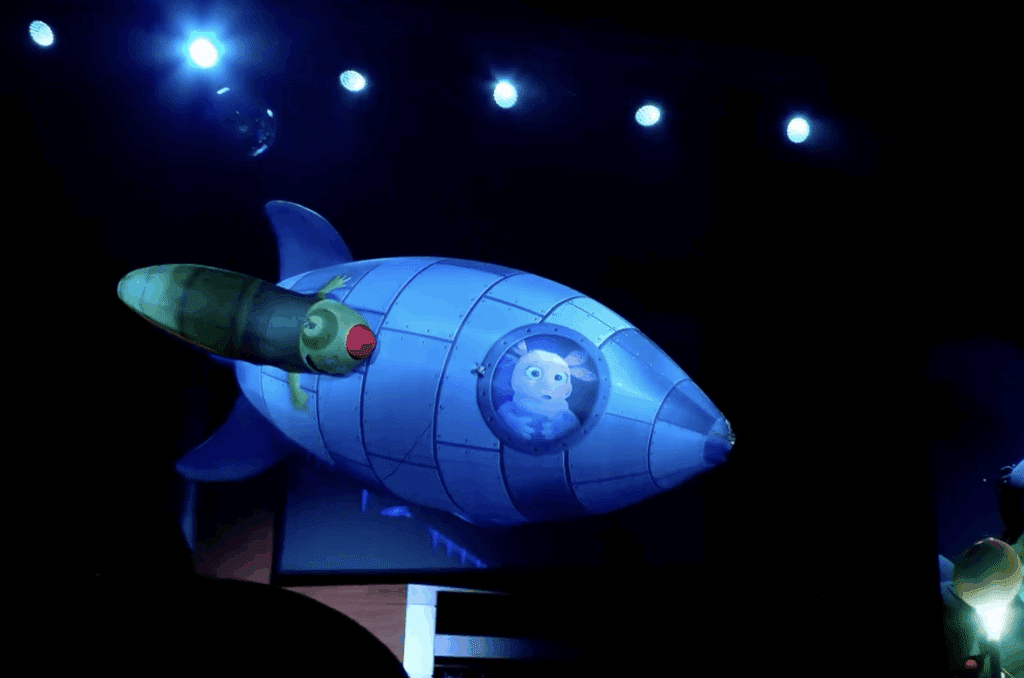
Original Design
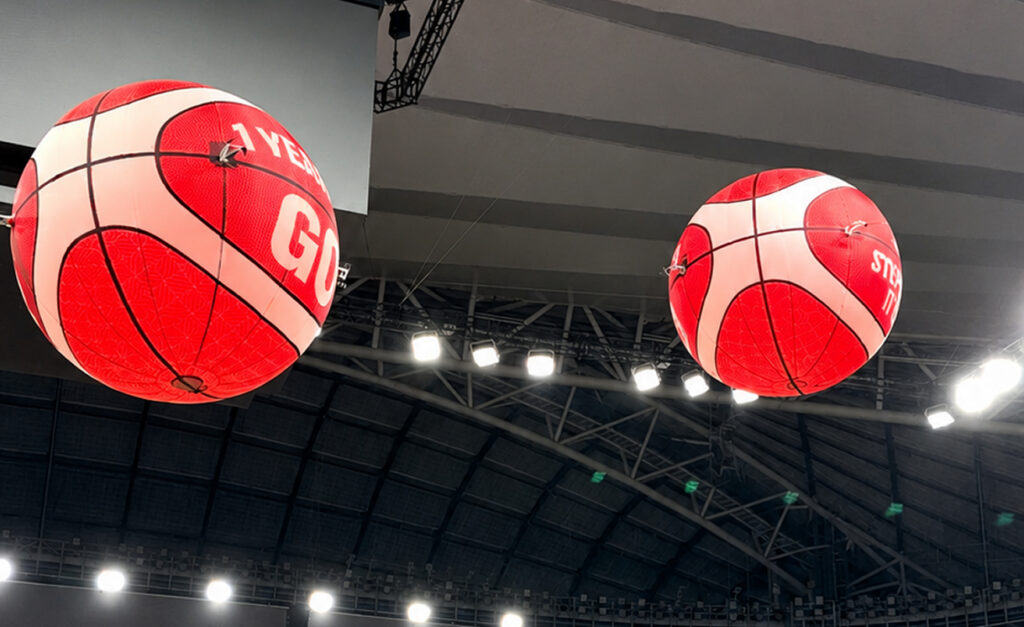
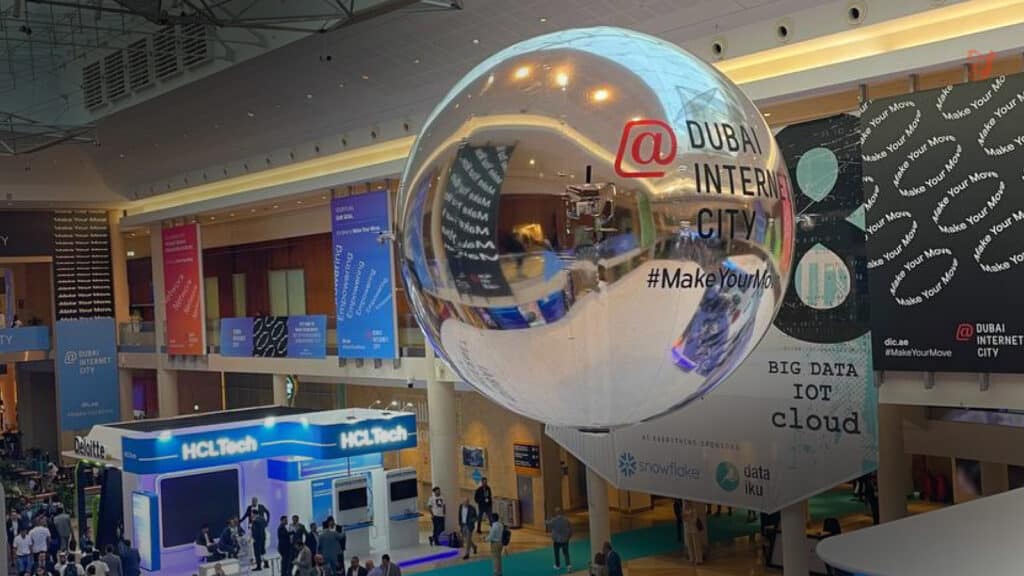
We design every airship to scale and keep the lines of the chosen shape, whether it is a geometric form, an animal or a product. The surface carries a logo, a message or a QR code that still scans from the far side of the venue
Nearly weightless structure, engineered for safe, controlled flight over audiences
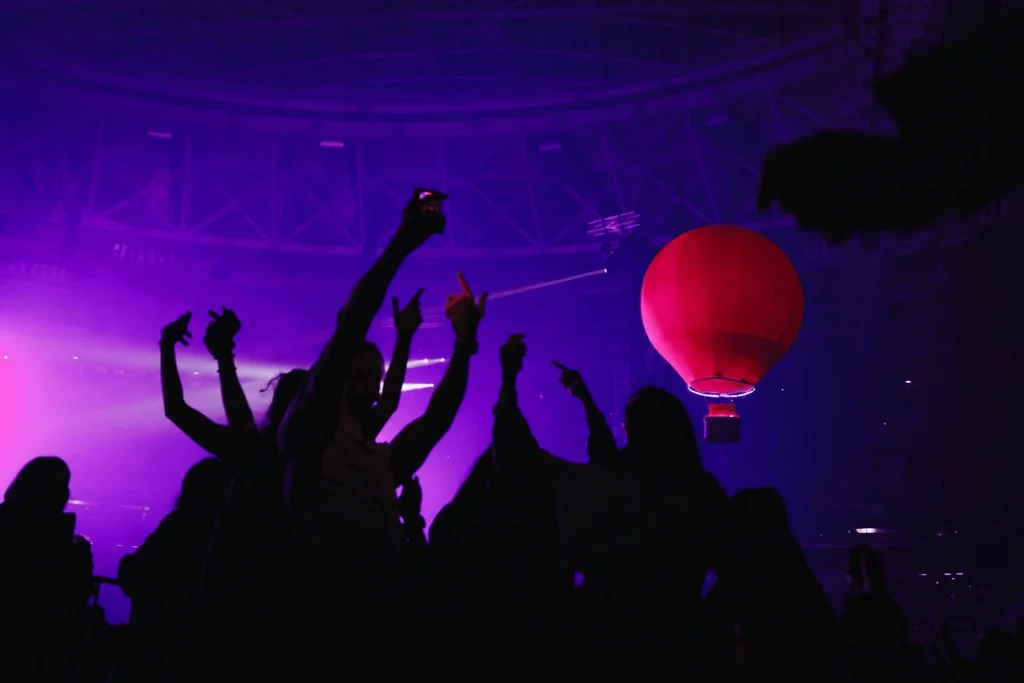
Book Your ShowWe turn the sky into a canvas for advertising, performance and decor, with airships in any shape: spheres, cubes, whales, penguins or replicas of a product. Each one is more than a motorised craft. It is a piece of aerial art, built by our 3D designers and engineers, and it is safe to fly over an audience: a nearly weightless structure filled with non-flammable helium.
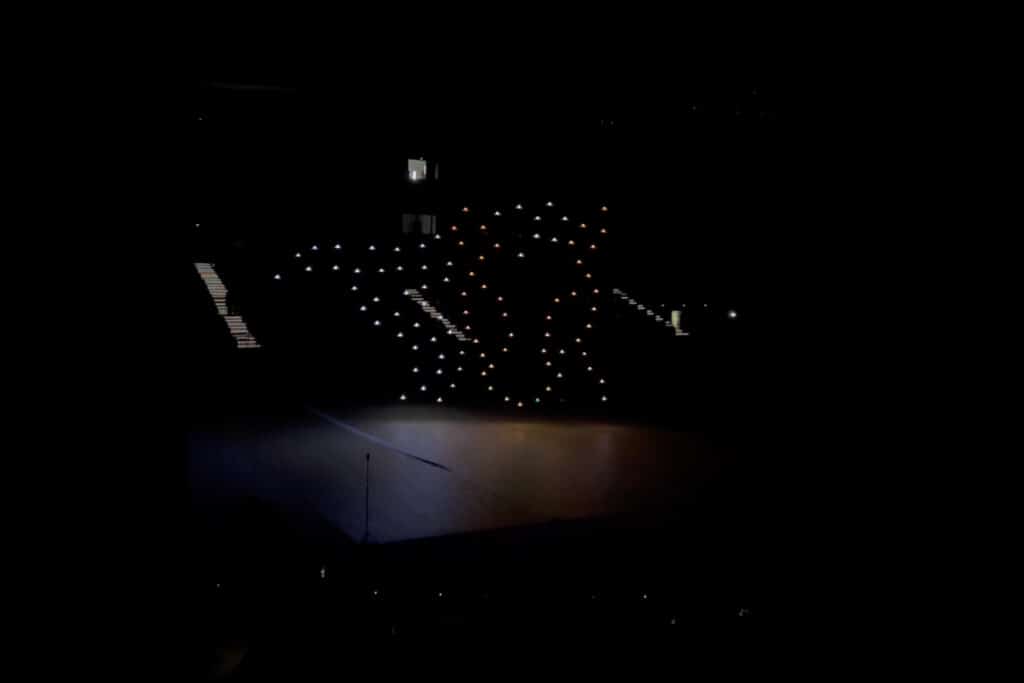
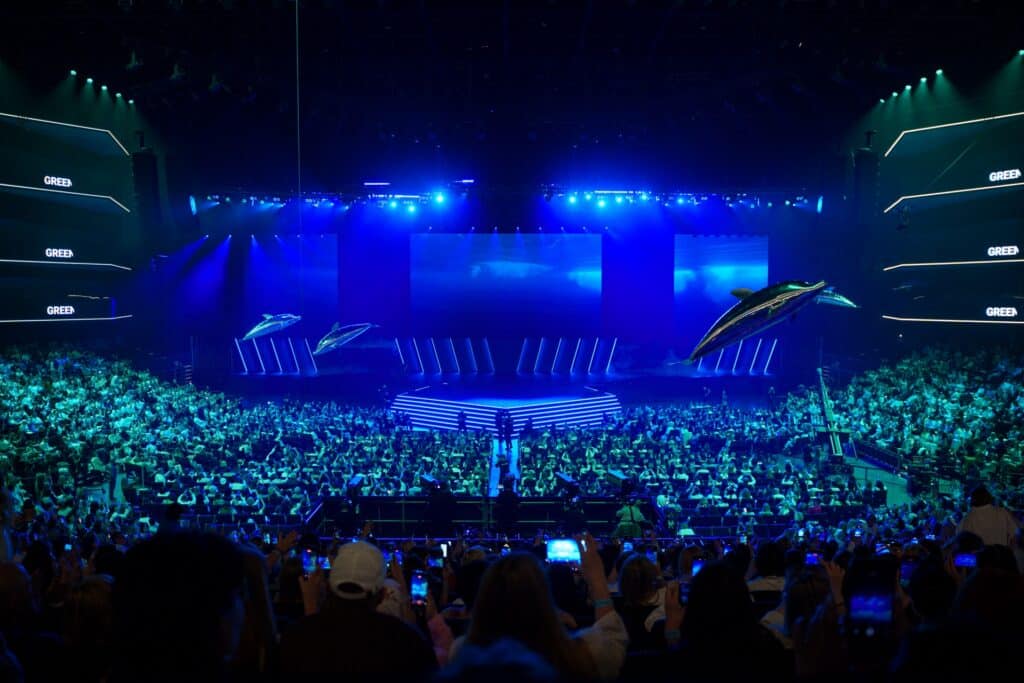
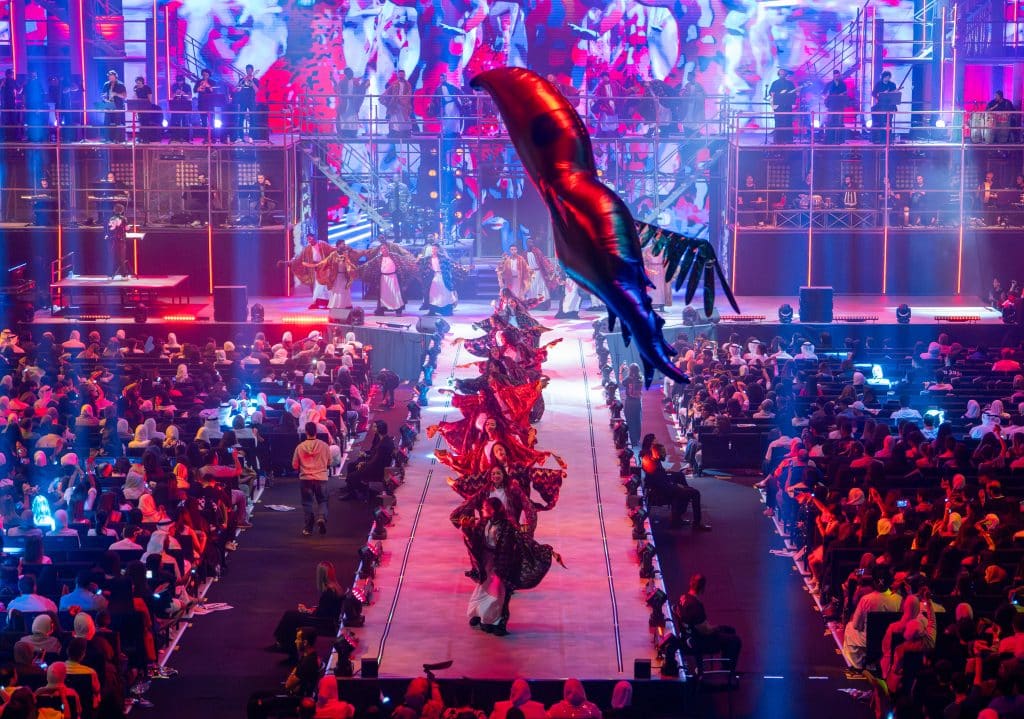
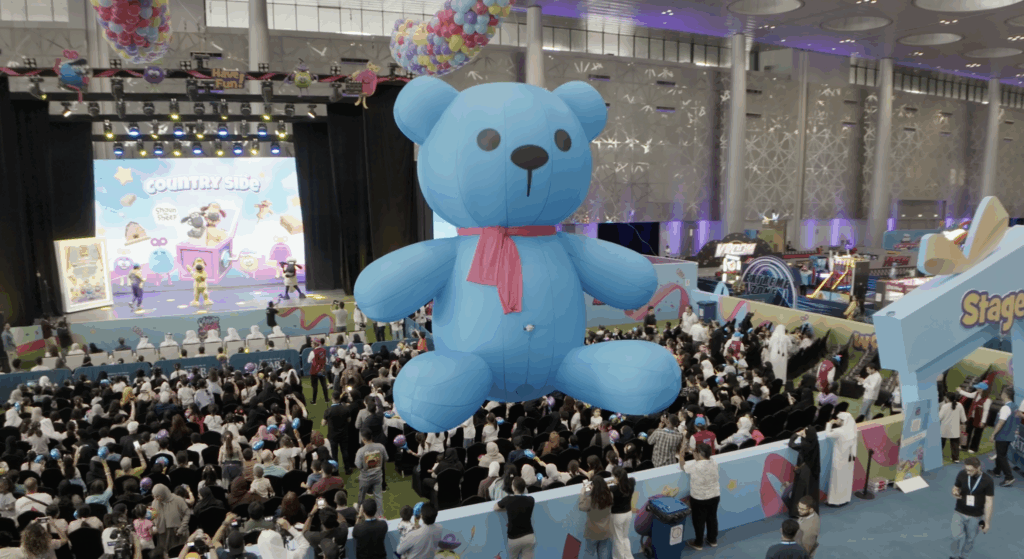
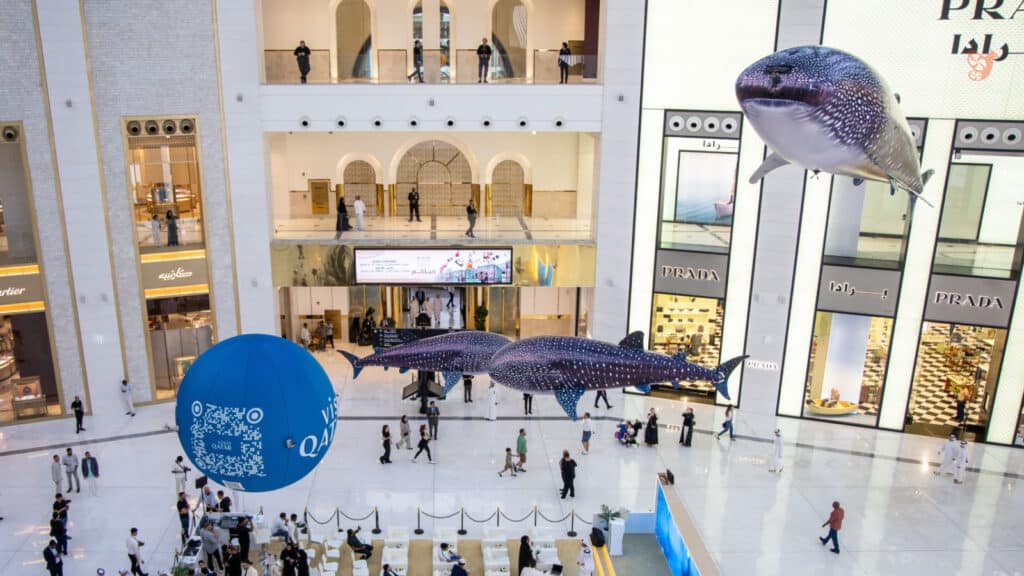
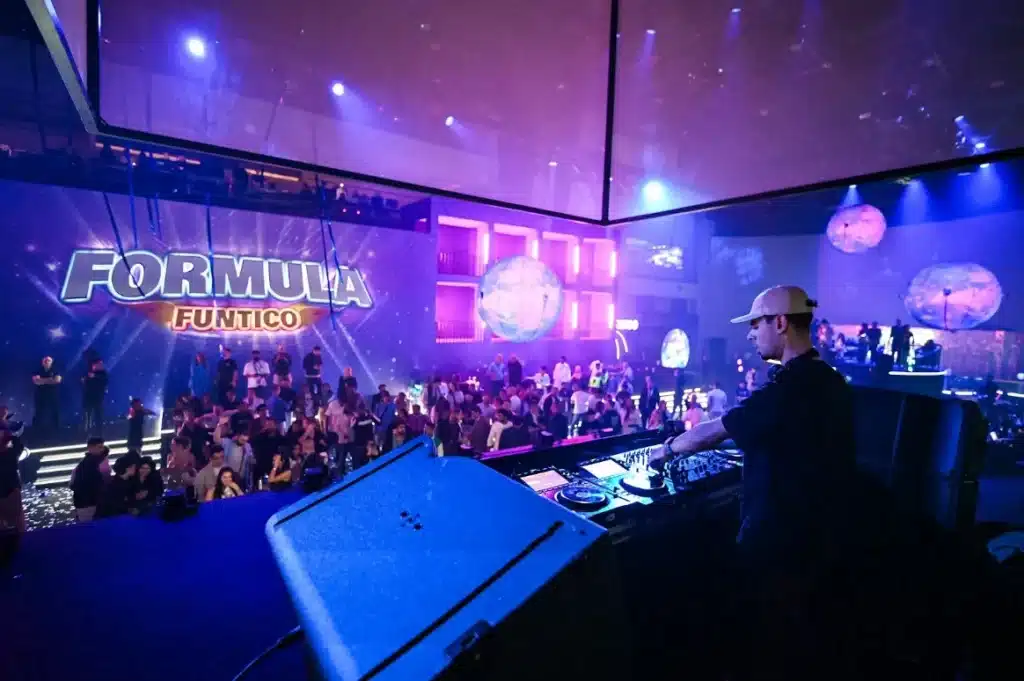
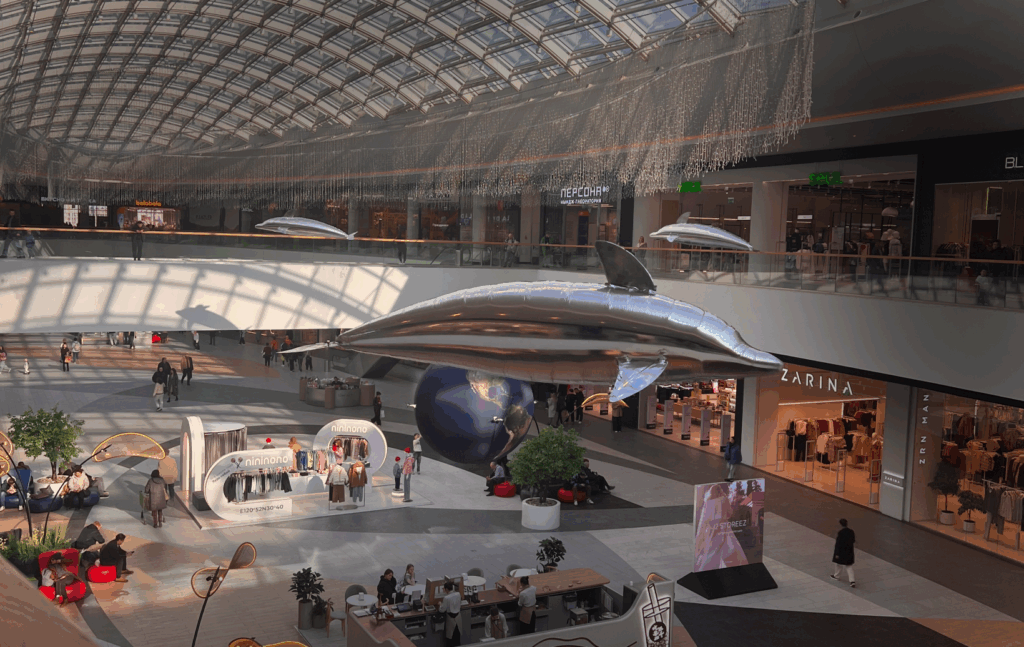
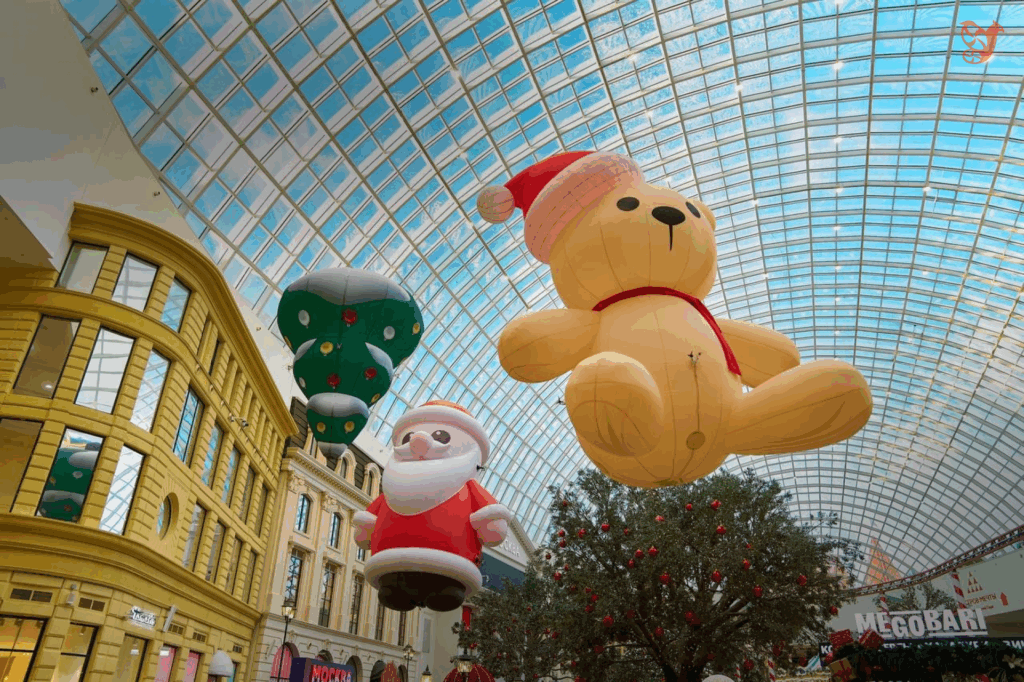
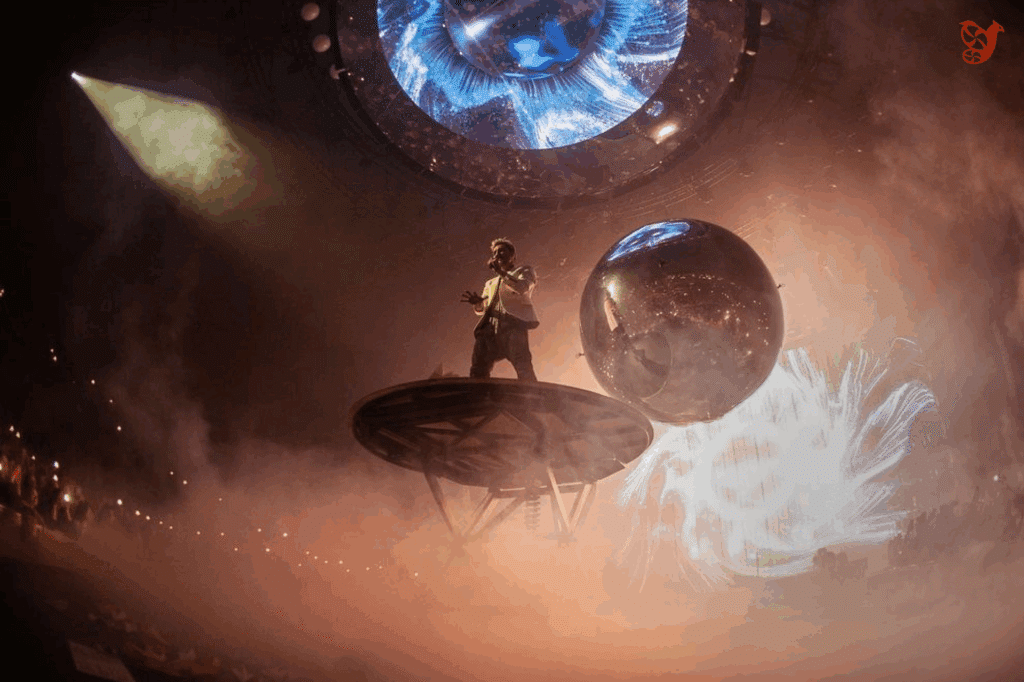
Our airships have flown in Dubai, Riyadh, Doha and Kuwait. At the Funtico token launch in Dubai they moved above the guests through the evening, working as part of the set design rather than as an act. At a medical conference at the Hilton Riyadh they carried the Lynparza logo and the conference slogan between the speeches of doctors and professors. In Doha a blue teddy bear flew through the halls of the Doha Exhibition & Convention Center for the Qatar Toy Festival, and whale sharks flew for a Qatar Tourism campaign. In Kuwait, toucans flew above the stage and the audience, every flight choreographed and synchronised with the music. Five dolphins flew inside a large shopping centre, working through the day across the atrium.
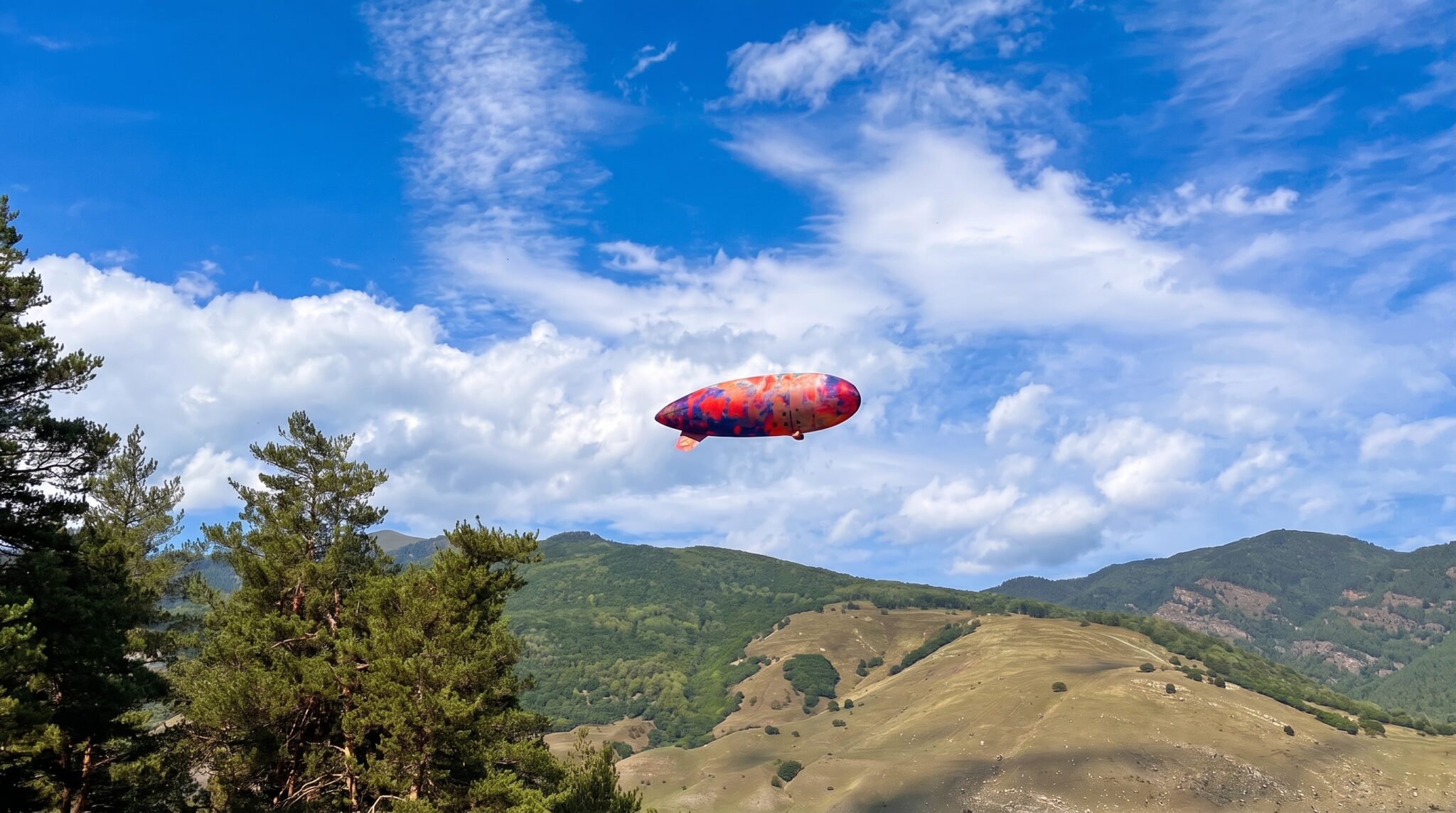
Outdoors we go larger: for stable flights in the open we normally use radio-controlled airships of 8–12 metres. An outdoor DRONICO airship flew in the mountains during the filming of a television show, in conditions where air pressure and every gust of wind could alter the script. By market: Saudi Arabia, indoors, Doha and Qatar, Türkiye.

We design every airship to scale and keep the lines of the chosen shape, whether it is a geometric form, an animal or a product. The surface carries a logo, a message or a QR code that still scans from the far side of the venue
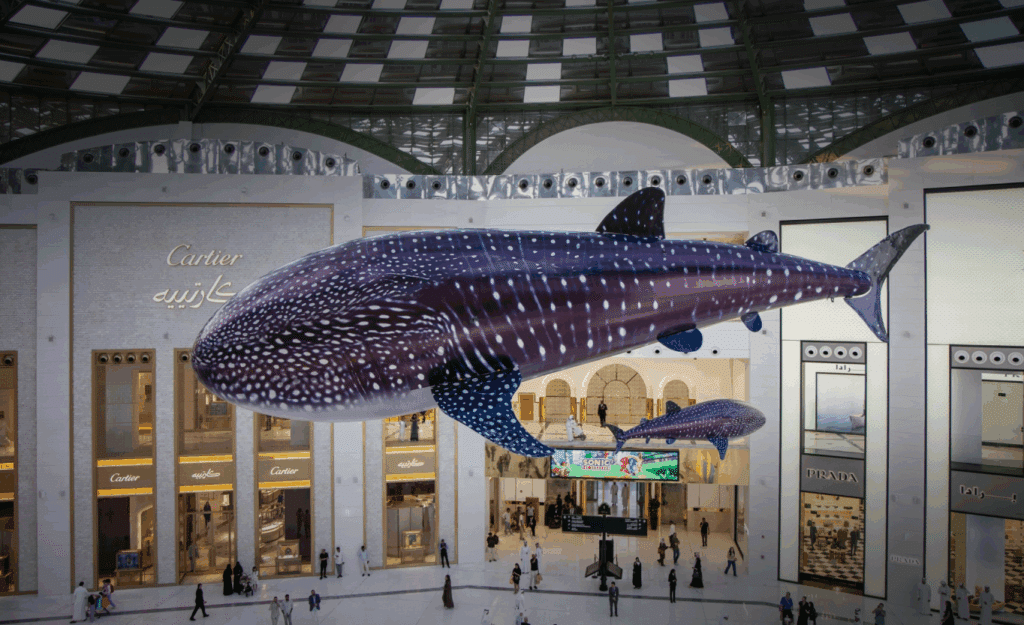
The hull is shaped for aerodynamics, and the flight controllers hold a smooth, steady path. The airship moves the way the audience expects a living thing to move, and that is what makes it work

Our lightweight airships are filled with non-flammable helium, which makes them safe even over people. Each one carries stabilisers and a control system, and goes through a series of test flights and checks. The pilot watches it continuously through the flight
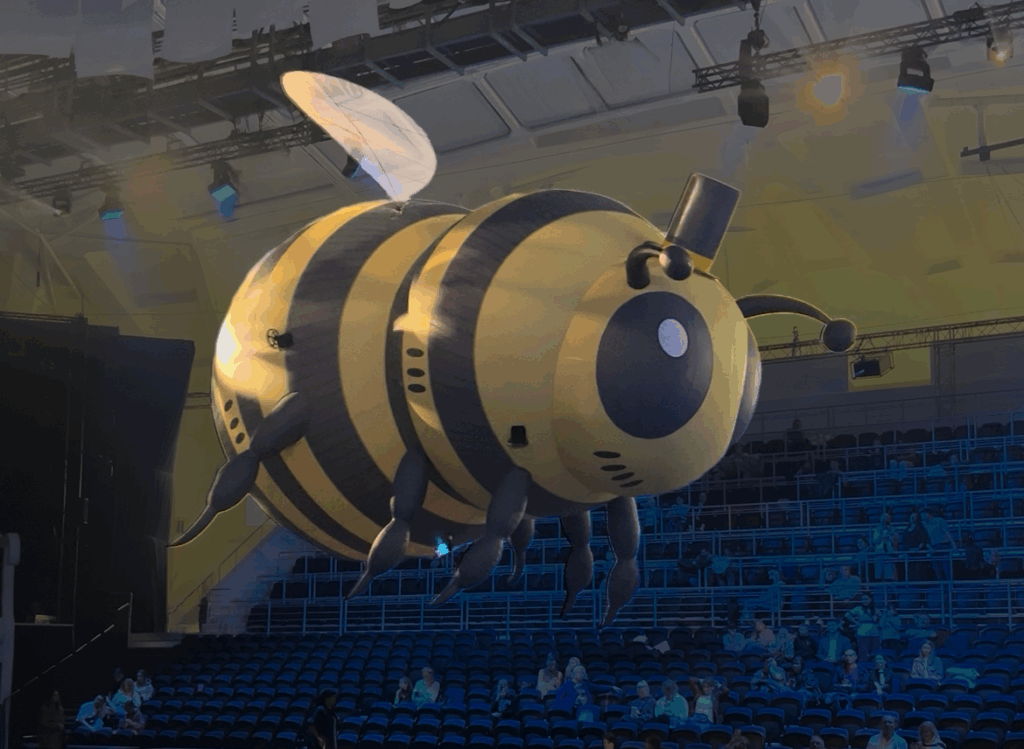
An airship is impossible to overlook: it takes the attention of the room and holds it. People photograph it, film it and post it, which gives the brand reach and engagement at no extra cost

An airship carrying your logo, your campaign message or a QR code is visible from anywhere in the venue. It is an advertising medium with volume and movement, and it holds attention in a way a static banner cannot
We discuss the concept and the goals of the flight, measure the atrium or venue where the airship will fly and choose the right size for it
We identify airspace constraints: weather for outdoor flights, safety restrictions and other external factors
We obtain venue permissions, close the agreements and set the timeline for every stage of development
We approve the concept and start the design: the shape, the dimensions and the materials of the airship
We select the material for the envelope, the electronic components and the power source to meet the flight time and weight we need
We build the prototype envelope, assemble the electronic control system and integrate it with the airship, then test the prototype for manoeuvrability, stability and flight safety and make the changes it needs
We complete the assembly and calibrate the control system for manoeuvrability and directional stability, check that the airship is safe and ready to operate, and fly a demonstration
We assemble the airship and prepare it for flight, rehearse the manoeuvres and check every system for safety and reliability
We fly the show on cue, then take the airship apart and pack it down
An airship is powered and steerable; a balloon is not. Both are lighter-than-air craft, but an airship has engines and rudders and flies where the pilot takes it, while a balloon drifts with the wind.
No. Airships and drones differ in construction and flight principles. Drones rely on rotors and weight to stay airborne, consuming more energy. Airships use buoyancy from helium to float, requiring less energy and enabling stable, elegant flight, perfect for advertising and decorative displays.
The envelope holds helium: a gas lighter than air, non-flammable and inert. The difference in densities produces lift, and under normal conditions one cubic metre of helium gives about one kilogram of it. That is not payload. Out of it come the mass of the envelope, the propulsion system, the batteries, the electronics, the fixings, the lighting and the decorative elements.
So the key parameter in operation is not the quantity of helium but the balance of buoyancy. In practice the trim is set close to neutral: the airship should not tend to rise sharply or drop sharply without thrust. The propellers and the controls are used to move along a trajectory and hold orientation, rather than to fight gravity continuously.
That is the difference from a drone. A drone stays up on thrust; an airship stays up on the lift of the gas. With buoyancy trimmed correctly it should not drop sharply if propeller thrust is briefly lost, and that is what makes it possible to consider flying directly above people. Flying over people is always a combination of three things: limited modes of movement, where speed and altitude are chosen for controllability rather than for the beauty of the shot; control of the environment; and procedures, where the pilot sees the whole trajectory and knows about any stage effects that are planned.
Indoors the governing factors are air currents: the ventilation, heat curtains, open doorways and local jets of air from equipment and from the stage. If the ventilation changes mode automatically or gates open, the airship can be pushed off line even under careful piloting. The barriers here are not an experienced pilot but an understanding of the airflow, trajectories chosen with clearance from structures, and a test run in the same mode the event will run in.
The second factor is the ceiling. Trusses, cables, rigging, decorative elements, sound systems and banner lines make what we call a ‘dirty ceiling’. That is where no-fly zones come from, and altitude limits, and the principle of not flying where a safe trajectory cannot be guaranteed.
The third is contact with a person. In scenarios with visitors the main risk is usually not the envelope but the propeller zone and the unpredictable actions of people: raised hands, props, children, a crowd at the point of interest. The barriers are a speed limit above people, a limit on altitude and propeller guards.
It is better to say so in advance than to promise the director something that cannot be delivered properly.
An airship is not suitable when no clear corridor can be set aside in altitude and route, because there is too much rigging, too many cables, wires and decor, with no way to define no-fly zones. When the ventilation is unpredictable and the building’s ventilation and air-conditioning modes cannot be agreed. When the director needs high speed, sharp manoeuvres or work in tight passages beside the set. When stage effects run as a dense background and get in the way of visibility and control. And when there is no time for a test and a rehearsal in the real conditions of the venue.
You cannot ask an airship for the agility of a drone: it is an instrument of smooth movement and controlled presence.
Yes, an airship can remain aloft over your event for several consecutive days. Short landings are required to recharge batteries, refill helium and swap pilots.
As a guide: one sphere, cube or dolphin airship is about $4,000 (AED 14,700) for a day of flying, with helium at about $240 (AED 900) a day on top. A heart or a 3-metre sphere is about $4,800 (AED 17,600), a 6-metre whale, shark or airship about $6,500 (AED 23,900), and a whale of 8 to 10 metres from about $12,000 (AED 44,000). Custom-built shapes run from about $6,500 for a small one to about $30,000 (AED 110,100) for a large outdoor blimp. When several objects fly on the same day, the rate per object is lower.
For an exact figure, please talk to our sales team. We will ask about the venue, the dates, the audience and what the event has to achieve. That is what the final number depends on.
All prices are indicative and every project is quoted individually. The figure depends on the date and the season, the venue, the number of objects and events, the number of flight days, the number of flight hours and take-offs a day, the lead time for a custom build, helium, the crew technical and hospitality riders, flight permits, logistics and, where required, customs clearance. Prices exclude 5 per cent VAT in the UAE.
Yes. For stable outdoor flights we normally use larger radio-controlled airships of 8–12 metres. To plan accurately we need your location and the expected weather conditions.
We measure the atrium or the venue where the airship will fly and choose the size for it. That happens at the planning stage, before anything is built. Outdoors we go larger: for stable flights in the open we normally use radio-controlled airships of 8–12 metres.
Every airship is designed to scale and keeps the lines of the chosen shape, whether that is a geometric form, an animal or a product, and the surface carries your design. A sphere works as a clean canvas: the branding reads from any angle and from anywhere in the hall. A custom, branded envelope is delivered without flight hardware and remains with you after the event.
Tell us the venue, the dates, the audience and what the event has to achieve. That is what the size and the final figure depend on, and our sales team will come back with both.
Custom, branded envelopes, designed specifically for you, are delivered without flight hardware and remain with the client after the event.
Yes. The daily rate goes down for longer bookings, but we quote multi-day projects case by case: the figure depends on the number of objects, the number of flight hours and take-offs a day, helium, logistics and permits.
Tell us the dates and the venue and our sales team will come back with a number. Prices exclude 5 per cent VAT in the UAE.
Public liability is insured for two million US dollars, and the cover is worldwide. In the countries where we have representative offices, the UAE, Saudi Arabia, Türkiye and India, we obtain the flight permits ourselves and carry the approval process with the aviation authority. Elsewhere the permit is obtained by a local partner company under its own jurisdiction, and we prepare the package for approval: coordinates, altitudes, the time window and the safety plan. Our pilots are licensed and the equipment is backed up.